Chapter 11  ·  Antilipidemic Drugs

Section 1

Lipoprotein Structure and Classification

How lipids are packaged and transported in the bloodstream

Lipids are hydrophobic molecules that cannot dissolve freely in plasma. To travel through the bloodstream, they are packaged into lipoproteins — spherical particles with a hydrophobic core of triglycerides and cholesterol esters surrounded by a phospholipid shell, free cholesterol, and one or more apolipoproteins. The apolipoprotein component governs how each particle is recognized by receptors and metabolized. Lipoproteins are classified by density, which inversely reflects lipid content: the higher the fat content, the lower the density.
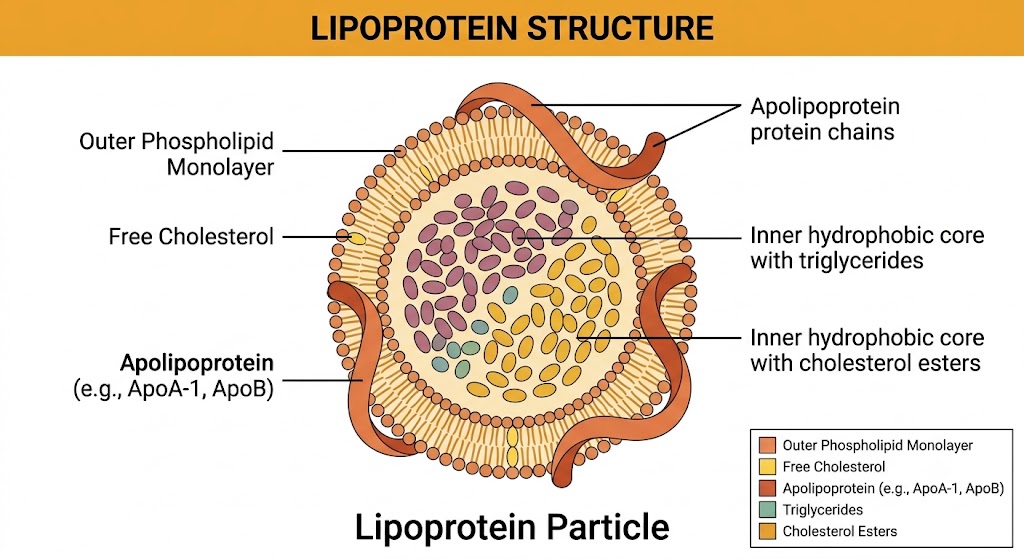
Diagram showing the cross-sectional structure of a lipoprotein particle with labeled phospholipid shell, free cholesterol, apolipoprotein protein chains, triglyceride core, and cholesterol ester core.
Structure of a lipoprotein particle showing the hydrophobic core, phospholipid monolayer, and apolipoprotein surface components. Figure generated by Gemini AI.

Chylomicrons

Chylomicrons are the largest and least dense lipoproteins. They are assembled in intestinal cells to carry dietary fat and cholesterol absorbed from a meal. Their structural apolipoprotein is apolipoprotein B-48. Because of their large size, chylomicrons cannot penetrate the arterial wall directly, but the smaller remnant particles produced after their triglycerides are hydrolyzed do enter the arterial wall and contribute to plaque formation.

Very Low-Density Lipoprotein

Very low-density lipoprotein particles are assembled in the liver and serve as the primary vehicle for exporting triglycerides to peripheral tissues. They carry apolipoprotein B-100, apolipoprotein C-II (which activates lipoprotein lipase at the capillary wall), and apolipoprotein E (which mediates hepatic uptake of remnant particles). As very low-density lipoprotein is progressively stripped of its triglycerides by lipoprotein lipase, it shrinks through intermediate-density lipoprotein to become low-density lipoprotein.

Low-Density Lipoprotein

Low-density lipoprotein is the primary cholesterol-carrying particle in plasma and the dominant atherogenic lipoprotein. It is cholesterol-enriched and carries apolipoprotein B-100 as its sole apolipoprotein. Apolipoprotein B-100 is the ligand recognized by the low-density lipoprotein receptor on liver cells, which normally clears low-density lipoprotein from the circulation. When low-density lipoprotein receptor activity is reduced — whether from genetic mutation, dietary saturated fat, or proprotein convertase subtilisin/kexin type 9-mediated receptor degradation — low-density lipoprotein cholesterol accumulates in the plasma and accelerates atherosclerosis.

High-Density Lipoprotein

High-density lipoprotein is the smallest and densest lipoprotein, primarily carrying apolipoprotein A-I and apolipoprotein A-II. It mediates reverse cholesterol transport, collecting cholesterol from peripheral tissues and returning it to the liver for excretion. A low high-density lipoprotein cholesterol level is a well-established cardiovascular risk marker, though raising high-density lipoprotein cholesterol pharmacologically has not consistently reduced cardiovascular events in clinical trials. This suggests that high-density lipoprotein function matters more than its concentration alone.

Lipoprotein(a)

Lipoprotein(a) is a distinct low-density lipoprotein-like particle in which apolipoprotein B-100 is covalently linked to a unique protein called apolipoprotein(a). Lipoprotein(a) levels are more than ninety percent genetically determined and are not meaningfully changed by diet or standard lipid-lowering drugs. Elevated lipoprotein(a) is an independent cardiovascular risk factor, and it is an emerging pharmacological target. Proprotein convertase subtilisin/kexin type 9 inhibitors reduce lipoprotein(a) by roughly twenty percent, and novel agents targeting its synthesis are in late-stage clinical development.

Apolipoprotein B as a Unifying Concept

Every atherogenic lipoprotein — very low-density lipoprotein, intermediate-density lipoprotein, low-density lipoprotein, and lipoprotein(a) — carries exactly one copy of apolipoprotein B-100 per particle. Measuring apolipoprotein B therefore directly counts the total number of atherogenic particles in the plasma, which is why it is a more precise measure of cardiovascular risk than low-density lipoprotein cholesterol concentration alone, particularly in patients with high triglycerides or small dense low-density lipoprotein particles.
Section 2

Lipoprotein Metabolism — The Three Pathways

The exogenous pathway, the endogenous pathway, and reverse cholesterol transport

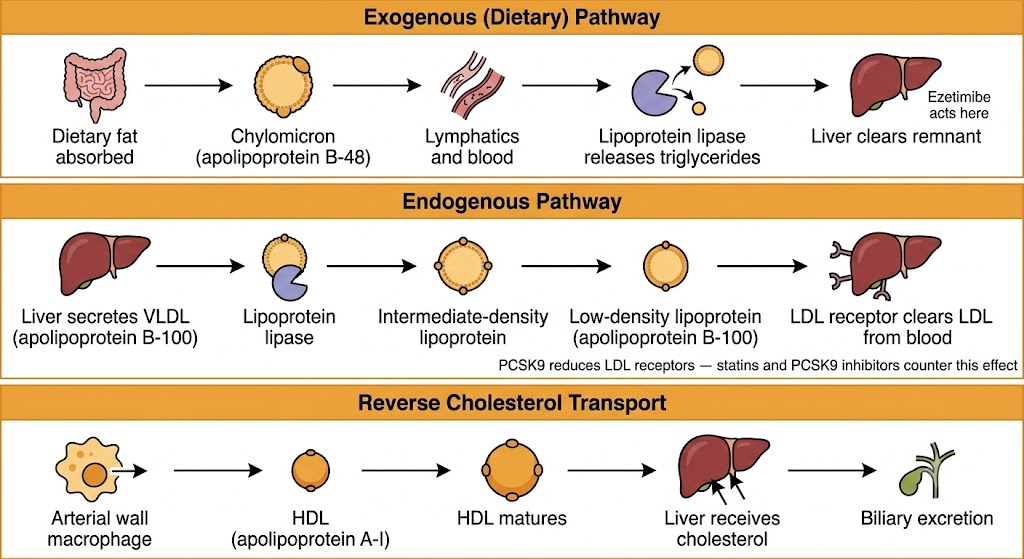
Understanding how lipoproteins are made, modified, and cleared is the foundation for understanding how every lipid-lowering drug works. Three interconnected metabolic pathways govern lipoprotein traffic in the body, and each is a potential pharmacological target.

Three-panel flow diagram showing the exogenous dietary pathway with chylomicrons traveling from intestine to liver, the endogenous pathway with VLDL remodeled through IDL to LDL cleared by the LDL receptor, and reverse cholesterol transport with HDL collecting cholesterol from arterial wall macrophages and returning it to the liver for biliary excretion.
The three major lipoprotein metabolic pathways showing sites of action for the major lipid-lowering drug classes. Figure generated by Gemini AI.

The Exogenous (Dietary) Pathway

After a meal, dietary fat and cholesterol are absorbed in the small intestine and packaged into chylomicrons by intestinal cells. Chylomicrons travel through the lymphatic system and enter the bloodstream, where they deliver triglycerides to adipose tissue and skeletal muscle. At the capillary wall, apolipoprotein C-II on the chylomicron surface activates lipoprotein lipase, which hydrolyzes the triglyceride core and releases fatty acids for local use.

After losing most of their triglycerides, the remnant particles are taken up by the liver using apolipoprotein E as the recognition signal. This pathway is relevant to pharmacology because bile acid sequestrants and ezetimibe both act at the intestinal level to reduce the amount of cholesterol delivered to the liver via this route, which in turn stimulates the liver to upregulate low-density lipoprotein receptors.

The Endogenous Pathway

The liver continuously secretes very low-density lipoprotein particles loaded with triglycerides derived from fatty acid synthesis and uptake. In peripheral tissues, lipoprotein lipase again hydrolyzes the triglyceride core, progressively remodeling very low-density lipoprotein through intermediate-density lipoprotein to low-density lipoprotein. The steady-state plasma low-density lipoprotein cholesterol concentration reflects the balance between how much low-density lipoprotein is produced and how quickly it is cleared by the liver.

Hepatic clearance depends on the low-density lipoprotein receptor, whose expression is dynamically regulated. When intracellular cholesterol falls — as occurs when statins block cholesterol synthesis — the liver upregulates low-density lipoprotein receptor expression to import more cholesterol from the plasma. This compensatory receptor upregulation is the primary mechanism by which statins lower plasma low-density lipoprotein cholesterol.

Proprotein convertase subtilisin/kexin type 9 is a serine protease secreted by the liver that binds the low-density lipoprotein receptor on the hepatocyte surface and directs it to lysosomal degradation rather than recycling. Elevated proprotein convertase subtilisin/kexin type 9 activity therefore reduces the number of receptors available to clear low-density lipoprotein from the plasma. Statin therapy paradoxically increases proprotein convertase subtilisin/kexin type 9 levels, which partially limits the receptor upregulation statins otherwise produce. Blocking proprotein convertase subtilisin/kexin type 9 allows more receptors to be recycled to the hepatocyte surface, dramatically amplifying low-density lipoprotein clearance.

Reverse Cholesterol Transport

Reverse cholesterol transport is the process by which cholesterol is retrieved from peripheral tissues — including arterial wall macrophages — and returned to the liver for biliary excretion. Small, protein-rich high-density lipoprotein particles acquire free cholesterol from peripheral cells. The cholesterol is then esterified and either transferred to low-density lipoprotein or delivered directly to the liver via a hepatic receptor called scavenger receptor class B type I. This pathway is why high-density lipoprotein is considered antiatherogenic: it removes cholesterol from the arterial wall and escorts it out of the body.


Section 3

Lipid Fractions and Cardiovascular Risk

What each lipid measurement tells us about a patient’s risk

A standard lipid panel measures total cholesterol, low-density lipoprotein cholesterol, high-density lipoprotein cholesterol, and triglycerides. Each fraction contributes differently to cardiovascular risk, and each has a different relationship to pharmacological intervention.

Low-Density Lipoprotein Cholesterol

Low-density lipoprotein cholesterol is the primary therapeutic target for reducing atherosclerotic cardiovascular disease. The causal relationship between low-density lipoprotein cholesterol and atherosclerosis is one of the strongest in medicine, established across multiple lines of evidence. Lowering low-density lipoprotein cholesterol reduces major cardiovascular events regardless of which drug class achieves the reduction — statins, ezetimibe, and proprotein convertase subtilisin/kexin type 9 inhibitors all reduce events in proportion to the low-density lipoprotein cholesterol reduction achieved. The general principle is: lower is better, and more reduction means more benefit, especially in higher-risk patients.

Triglycerides

Fasting triglycerides reflect the combined burden of very low-density lipoprotein and remnant particles in the blood. Elevated triglycerides (above 150 milligrams per deciliter) are associated with increased cardiovascular risk and often accompany insulin resistance, type 2 diabetes, and obesity. At very high levels (above 500 milligrams per deciliter), triglycerides also carry a risk of acute pancreatitis, which is a medical emergency requiring dietary fat restriction and triglyceride-specific treatment.

High-Density Lipoprotein Cholesterol

Low high-density lipoprotein cholesterol (below 40 milligrams per deciliter in men, below 50 milligrams per deciliter in women) is associated with higher cardiovascular risk and is a component of the metabolic syndrome. However, raising high-density lipoprotein cholesterol pharmacologically has not reduced cardiovascular events in clinical trials, which means high-density lipoprotein cholesterol should be used as a risk marker rather than a pharmacological target.

Non-High-Density Lipoprotein Cholesterol

Non-high-density lipoprotein cholesterol is calculated by subtracting high-density lipoprotein cholesterol from total cholesterol. It captures the cholesterol carried in all atherogenic apolipoprotein B-containing particles — very low-density lipoprotein, intermediate-density lipoprotein, low-density lipoprotein, and lipoprotein(a). This makes it a more complete estimate of atherogenic burden than low-density lipoprotein cholesterol alone, particularly in patients with elevated triglycerides where standard low-density lipoprotein cholesterol calculations may underestimate risk.

Primary target

Low-Density Lipoprotein Cholesterol

  • Main atherogenic particle carrying apolipoprotein B-100
  • Causal role in atherosclerosis firmly established
  • Primary target for all lipid-lowering drug classes
  • Lower is better across all risk categories

Risk marker

High-Density Lipoprotein Cholesterol

  • Mediates reverse cholesterol transport from arterial wall
  • Low level is a cardiovascular risk marker
  • Raising it pharmacologically has not reduced events
  • Not a primary pharmacological target

Atherogenic + pancreatitis risk

Triglycerides

  • Reflect very low-density lipoprotein and remnant burden
  • Elevated level associated with cardiovascular risk
  • Very high levels (>500 mg/dL) risk acute pancreatitis
  • Target for fibrates, omega-3 fatty acids, niacin

Emerging target

Lipoprotein(a)

  • Genetically determined; not altered by diet or statins
  • Independent cardiovascular risk factor
  • Proprotein convertase subtilisin/kexin type 9 inhibitors lower it ~20%
  • Novel targeted agents in late-stage development

Section 4

Dyslipidemia Classification

Primary (genetic) versus secondary (acquired) dyslipidemias

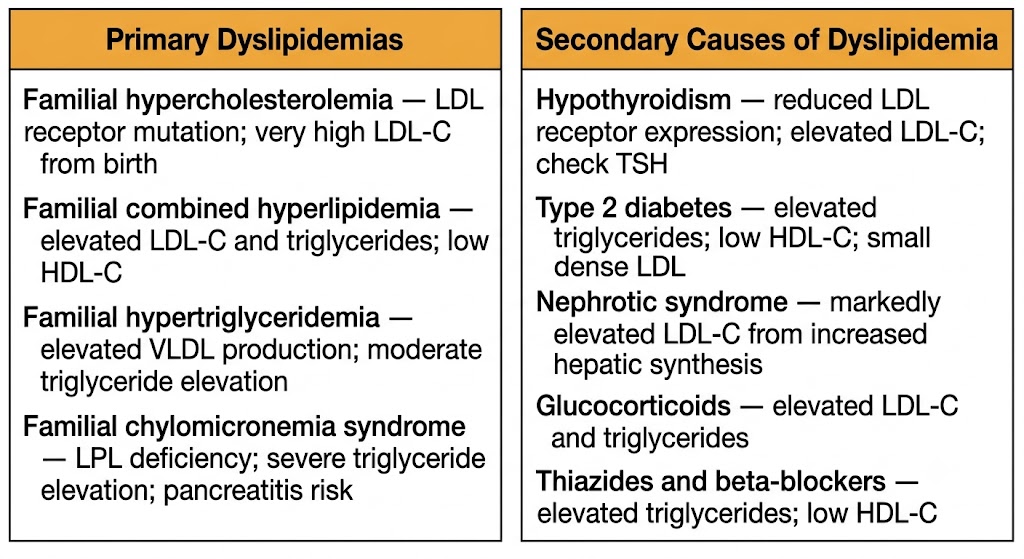
Dyslipidemias are classified as primary (genetic or polygenic) or secondary (due to an underlying medical condition or drug). Identifying secondary causes before prescribing lipid-lowering drugs matters because treating the lipid abnormality without correcting the underlying cause produces suboptimal results and may delay the diagnosis of a treatable disease.

Two-panel reference diagram showing primary dyslipidemias on the left including familial hypercholesterolemia, familial combined hyperlipidemia, familial hypertriglyceridemia, and familial chylomicronemia syndrome, and secondary causes of dyslipidemia on the right including hypothyroidism, type 2 diabetes, nephrotic syndrome, glucocorticoids, and thiazides and beta-blockers.
Classification of dyslipidemias into primary genetic forms and secondary acquired causes, with key features of each. Figure generated by Gemini AI.

Primary Dyslipidemias

Familial hypercholesterolemia is the most pharmacologically important primary dyslipidemia. It is caused by loss-of-function mutations in the low-density lipoprotein receptor gene, resulting in markedly elevated low-density lipoprotein cholesterol from birth. Heterozygous familial hypercholesterolemia affects approximately one in 250 people and requires high-intensity statin therapy, often with add-on agents. Homozygous familial hypercholesterolemia is rare but severe and may require special interventions beyond standard lipid-lowering drugs.

Familial combined hyperlipidemia is a common polygenic disorder characterized by variable elevations in both low-density lipoprotein cholesterol and triglycerides, often with low high-density lipoprotein cholesterol. Familial hypertriglyceridemia involves elevated hepatic very low-density lipoprotein production with moderate triglyceride elevation. Familial chylomicronemia syndrome, caused by lipoprotein lipase deficiency, produces severe triglyceride elevation above 1,000 milligrams per deciliter with acute pancreatitis risk; it does not respond to statins.

Secondary Causes — Screen Before Prescribing

Hypothyroidism reduces low-density lipoprotein receptor expression and is one of the most commonly overlooked causes of elevated low-density lipoprotein cholesterol. Thyroid-stimulating hormone should be checked in any patient presenting with unexplained hypercholesterolemia before initiating statin therapy.

Uncontrolled type 2 diabetes and insulin resistance produce a characteristic triad: elevated triglycerides, low high-density lipoprotein cholesterol, and an abundance of small dense low-density lipoprotein particles despite often-normal calculated low-density lipoprotein cholesterol. Nephrotic syndrome drives marked hypercholesterolemia through increased hepatic lipoprotein synthesis triggered by the loss of plasma proteins. Chronic kidney disease impairs lipoprotein clearance and produces mixed dyslipidemia.

Several drugs are important secondary causes. Thiazide diuretics and beta-blockers can raise triglycerides and lower high-density lipoprotein cholesterol. Glucocorticoids raise both low-density lipoprotein cholesterol and triglycerides. Atypical antipsychotic medications produce mixed dyslipidemia. Protease inhibitors used in human immunodeficiency virus treatment can cause severe hypertriglyceridemia.

Clinical Rule — Exclude Secondary Causes First

Before initiating or escalating lipid-lowering pharmacotherapy, exclude the most common secondary causes: hypothyroidism (check thyroid-stimulating hormone), uncontrolled diabetes (check hemoglobin A1c and fasting glucose), nephrotic syndrome (check urine protein), and review the patient’s full medication list for causative drugs. Correcting the underlying cause may normalize the lipid abnormality or substantially change the required drug intensity.


Section 5

Combination Therapy — Mechanistic Rationale

Why the major lipid-lowering drug classes are mechanistically complementary

When a single drug class cannot achieve the low-density lipoprotein cholesterol reduction required — because of intolerance, genetic resistance, or a very low treatment target — the mechanistic complementarity of available agents provides a rational framework for combination therapy. Understanding this framework before studying individual drug classes makes the logic of combination prescribing clear from the start.

Statins — The Foundation

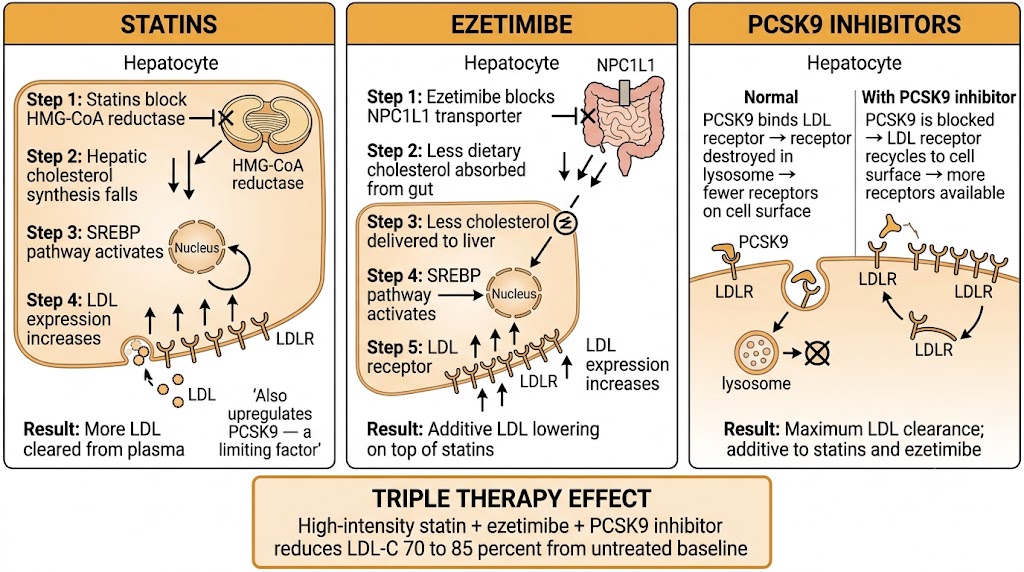
Statins inhibit 3-hydroxy-3-methylglutaryl coenzyme A reductase, the rate-limiting enzyme in hepatic cholesterol synthesis. The resulting fall in intracellular cholesterol triggers compensatory upregulation of low-density lipoprotein receptor expression on the hepatocyte surface, increasing clearance of low-density lipoprotein particles from the plasma. This receptor upregulation is the primary mechanism by which statins lower plasma low-density lipoprotein cholesterol.

A counterregulatory effect limits statin efficacy: statin therapy also upregulates proprotein convertase subtilisin/kexin type 9, which directs low-density lipoprotein receptors toward degradation rather than recycling back to the cell surface. This partially offsets the receptor upregulation. This is why blocking proprotein convertase subtilisin/kexin type 9 on top of statin therapy produces a dramatic additional reduction in low-density lipoprotein cholesterol.

Ezetimibe — Complementary Mechanism

Ezetimibe blocks the Niemann-Pick C1-Like 1 protein transporter in the intestinal brush border, which is responsible for absorbing cholesterol from the gut lumen. By reducing cholesterol delivery to the liver through the exogenous pathway, ezetimibe depletes hepatic cholesterol and triggers a compensatory increase in low-density lipoprotein receptor expression through the same sterol regulatory element-binding protein pathway that statins activate. This additive receptor upregulation is why the statin plus ezetimibe combination lowers low-density lipoprotein cholesterol more than either drug alone.

Proprotein Convertase Subtilisin/Kexin Type 9 Inhibitors — Maximum Receptor Density

Monoclonal antibodies targeting proprotein convertase subtilisin/kexin type 9 (evolocumab and alirocumab) and a small interfering ribonucleic acid agent (inclisiran) prevent proprotein convertase subtilisin/kexin type 9 from directing low-density lipoprotein receptors toward degradation. With fewer receptors destroyed, more receptors recycle to the hepatocyte surface, dramatically amplifying low-density lipoprotein clearance. Their effect is additive to statins and ezetimibe because they address the counterregulatory mechanism that limits how well those drugs work.

Triple therapy with high-intensity statin plus ezetimibe plus a proprotein convertase subtilisin/kexin type 9 inhibitor can reduce low-density lipoprotein cholesterol by seventy to eighty-five percent from untreated baseline — the most powerful lipid-lowering combination currently available.

Three-panel mechanism diagram showing statins blocking HMG-CoA reductase to upregulate the LDL receptor via the SREBP pathway, ezetimibe blocking the NPC1L1 intestinal transporter to also upregulate the LDL receptor, and PCSK9 inhibitors preventing PCSK9-mediated LDL receptor degradation to maximize receptor recycling, with a shared triple therapy box showing 70 to 85 percent LDL reduction.
Complementary mechanisms of statins, ezetimibe, and PCSK9 inhibitors at the hepatocyte LDL receptor pathway. Figure generated by Gemini AI.

Practical Sequencing of Combination Therapy

The guideline-endorsed approach is stepwise: first, optimize statin intensity to the highest tolerated dose; second, add ezetimibe if the low-density lipoprotein cholesterol target is not reached; third, add a proprotein convertase subtilisin/kexin type 9 inhibitor if the target remains unmet. This sequence reflects both the incremental evidence base and cost-effectiveness considerations, since ezetimibe is inexpensive and generic while proprotein convertase subtilisin/kexin type 9 inhibitors remain costly. In high-risk patients with very high baseline low-density lipoprotein cholesterol or recurrent cardiovascular events, earlier use of proprotein convertase subtilisin/kexin type 9 inhibitors is appropriate.


Suggested References
Author / Organization Title Source
Ference BA, Ginsberg HN, Graham I, et al. Low-density lipoproteins cause atherosclerotic cardiovascular disease. Evidence from genetic, epidemiologic, and clinical studies. A consensus statement from the European Atherosclerosis Society Consensus Panel. Eur Heart J. 2017;38(32):2459–2472
Ginsberg HN, Packard CJ, Chapman MJ, et al. Triglyceride-rich lipoproteins and their remnants: metabolic insights, role in atherosclerotic cardiovascular disease, and emerging therapeutic strategies. Eur Heart J. 2021;42(47):4791–4806
Goldstein JL, Brown MS. The LDL receptor. Arterioscler Thromb Vasc Biol. 2009;29(4):431–438
Tsimikas S. A test in context: lipoprotein(a): diagnosis, prognosis, controversies, and emerging therapies. J Am Coll Cardiol. 2017;69(6):692–711
Tall AR, Yvan-Charvet L. Cholesterol, inflammation and innate immunity. Nat Rev Immunol. 2015;15(2):104–116
Rye KA, Barter PJ. Cardioprotective functions of HDLs. J Lipid Res. 2014;55(2):168–179
Seidah NG, Awan Z, Chrétien M, Mbikay M. PCSK9: a key modulator of cardiovascular health. Circ Res. 2014;114(6):1022–1036
Grundy SM, Stone NJ, Bailey AL, et al. 2018 AHA/ACC Guideline on the Management of Blood Cholesterol. J Am Coll Cardiol. 2019;73(24):e285–e350
Mach F, Baigent C, Catapano AL, et al. 2019 ESC/EAS Guidelines for the management of dyslipidaemias. Eur Heart J. 2020;41(1):111–188
Boekholdt SM, Arsenault BJ, Mora S, et al. Association of LDL cholesterol, non-HDL cholesterol, and apolipoprotein B levels with risk of cardiovascular events among patients treated with statins: a meta-analysis. JAMA. 2012;307(12):1302–1309