Medical Pharmacology Chapter 11: Drugs Used in Treating Hyperlipidemia
|
|
Medical Pharmacology Chapter 11: Drugs Used in Treating Hyperlipidemia
|
|
|
|
|
|
|
Preferred initial approach except for conditions in which drug and diet management should begin simultaneously
Familial hypercholesterolemia
Familial combined hyperlipidemia
Major dietary factors influencing plasma LDL levels
Cholesterol intake
Saturated fat intake
Major dietary factor influencing plasma triglycerides (hypertriglyceridemia)
Total fat intake
Cholesterol and saturated fats increase LDL concentration independently
For patients with elevated LDL:
Total fat calories: 20-25% (saturated fats < 8% of total calories); monounsaturated fats predominate within fat allowance
Cholesterol < 200 mg/dL
Expectable serum cholesterol reduction (with this diet): 10%-20%
Weight reduction
Caloric restriction (especially for patients with increased VLDL and IDL)
For patients with elevated triglycerides:
Omega-3 fatty acids (fish oils): significant serum triglyceride level reduction in some patients.
Omega-6 fatty acids (vegetable oils): may increase triglyceride levels in these patients.
Pharmacological Management of Hyperlipidemia
Diet: adjunct to drug treatment
Avoid drug therapy in women likely to become pregnant or if lactating
Bile acid resins treatment for childrent (> 7 years old) with heterozygous familial hypercholesterolemia
|
|
|
Decreases VLDL and LDL plasma levels
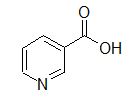
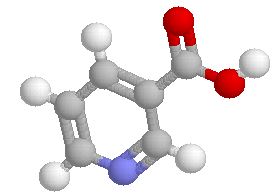
Chemistry and pharmacokinetics: niacin
Water-soluble vitamin
Urinary excretion:
Some Mechanisms of Action: niacin
Probable: VLDL secretion inhibition which decreases LDL production
Pncreased VLDL clearance
Decreased cholesterol synthesis
Decreased HDL catabolism (increasing HDL cholesterol plasma levels)
Clinical Use: niacin (vitamin B3)
Heterozygous familial hypercholesterolemia:
Severe mixed lipemia (inadequately responsive to diet)
Combined hyperlipoproteinemia
Familial dysbetalipoproteinemia
Hypercholesterolemia:
Most effective agent in increasing HDL cholesterol
Toxicity: niacin (vitamin B3)
Treatment initiation or upon increasing dosage: cutaneous vasodilation; sensation of warmth.
Aspirin pre-treatment (30 minutes before dosing) reduces this effect (prostaglandin-mediated)
Ibuprofen (once daily) alleviates us affect also
Acanthosis appearance: contraindication for continued niacin treatment; association with insulin resistance
In patients with severe peptic disease: avoid niacin
Hyperuricemia (frequency: 20%; gout may occur; allopurinol may be given with niacin to manage hyperuricemia)
Hypotension, especially in patients receiving antihypertensive medication
Gemfibrozil (Lopid)
|
|
|
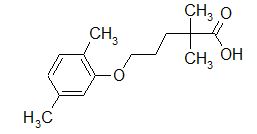
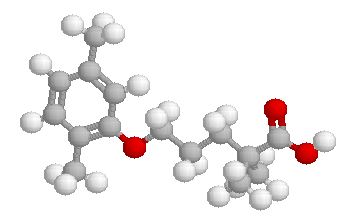
Overview: gemfibrozil (Lopid)
Reduces VLDL plasma levels
Increases lipoprotein lipases activity
Well absorbed (intestine)
Renal excretion: 70%; primarily unmodified
Mechanism of Action: gemfibrozil (Lopid)
Probably increases lipoprotein triglyceride lipolysis through lipoprotein lipase action
Clinical Use: gemfibrozil (Lopid)
Hypertriglyceridemia -- (VLDL predominates)
Dysbetalipoproteinemia
Gastrointestinal upset, myopathy, arrhythmias, hypokalemia, aminotransferase elevation, alkaline phosphatase elevation, skin rashes
Avoid in patients with hepatic or renal dysfunction
Small increase in gallstone incidence
Gemfibrozil should not be used in patients with combined hyperlipidemia and symptoms of CHD
Overview: Bile Acid-Binding Resins
|
|
|
|
|
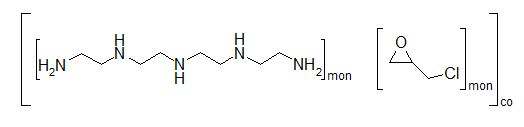
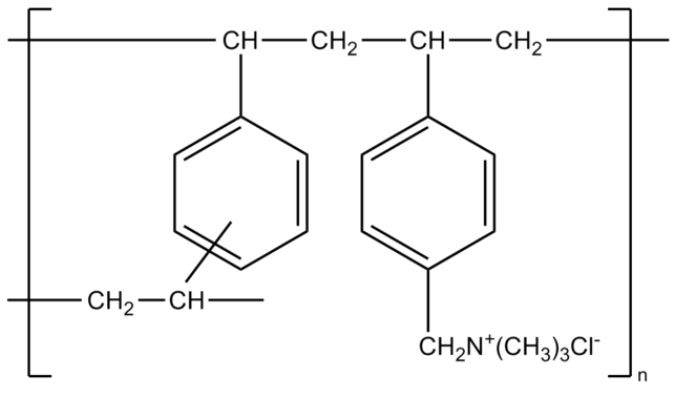
Colestipol (Colestid) and cholestyramine (Questran, Questran Light): clinical use --
Management of elevated LDL levels
Resin treatment in patients with hypertriglyceridemia + elevated LDL VLDL levels may be further increased
Chemistry and Pharmacokinetics: Bile acid-binding resins
Colestipol (Colestid) andcholestyramine (Questran, Questran Light):
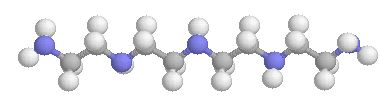
Polymeric cationic exchange resins
Water insoluble
Prevent reabsorption to bile acids by binding to them in the intestine
Resin: not absorbed systemically
Mechanism of Action: Bile acid-binding resins:
Bile acids (cholesterol metabolites): 95% reabsorbed in the jejunum and ileum
In the presence of binding resins: excretion increases up to 10X
Increased bile acid clearance causes increased conversion of cholesterol to bile acids (in the liver, 7-a hydroxylation)
Clinical Uses: Bile acid-binding resins:
In patients with familial hypercholesterolemia:
20% reduction in LDL cholesterol ( at maximal bile acid-binding resin dosages)
In less severe hypercholesterolemia: there is greater response at lower dosages
In patients with combined hyperlipidemia (LDL elevation) bile acid-binding resins lead to increased VLDL (requiring use of second drug (e.g. niacin))
Toxicity: Bile acid-binding resins:
Most common:
Constipation
Bloating (managed by increasing dietary fiber or adding psyllium seed to the resin preparation)
Drug-Drug Interactions:-- reduced absorption (neutral, cationic, anionic drugs)
|
Thiazides |
Warfarin |
Digitalis glycosides |
Tetracycline |
|
Vancomycin (Vancocin) |
Thyroxine |
Iron salts |
Pravastatin (Pravachol) |
|
Fluvastatin (Lescol) |
Folic acid |
Phenylbutazone |
Aspirin |
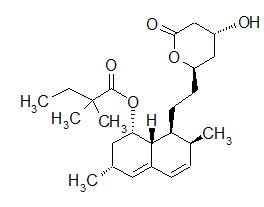
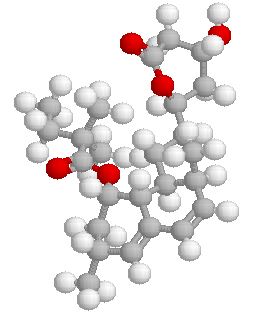
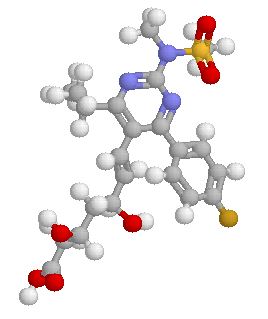
Reductase Inhibitors (Competitive Inhibitors of HMG-CoA reductase)
Overview: reductase inhibitors
Drugs: structural analogs HMG-CoA
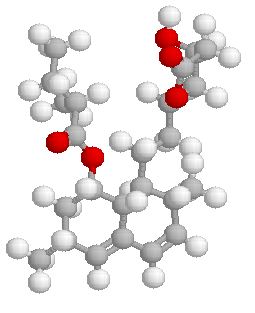
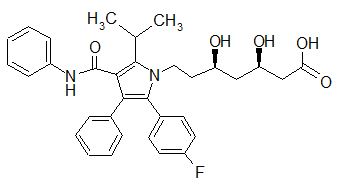
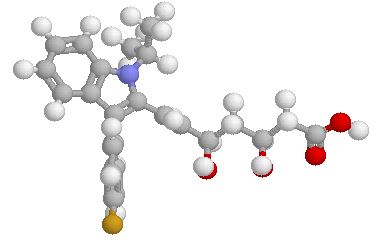
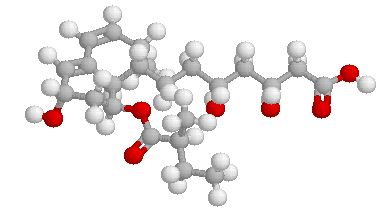
Listing: lovastatin (Mevacor), atorvastatin (Lipitor), fluvastatin (Lescol), pravastatin (Pravachol), simvastatin (Zocor), rosuvastatin (Crestor).
|
|
|
|
|
|
|
|
|
|
|
|
|
|
|
|
|
|
Chemistry and Pharmacokinetics: reductase inhibitors
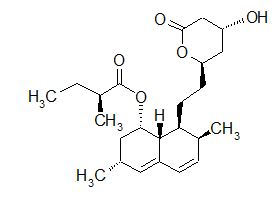
Prodrugs: lovastatin (Mevacor)and simvastatin (Zocor)
Active drugs: atorvastatin (Lipitor), pravastatin (Pravachol), fluvastatin (Lescol).
Variable levels of absorption
All reductase inhibitors: high first pass effect
Mechanism of Action: reductase inhibitors
HMG-CoA reductase:
Catalyzes first committed sterol biosynthesis step
Lovastatin (active form) and congeners: HMG-CoA structural analogs causes partial inhibition of HMG-CoA reductase
Reductase inhibitor leads to an increase in LDL high-affinity receptors
Reduces plasma LDL
Primary hepatic site of action
Small decreases in plasma triglycerides; slight increase in HDL cholesterol
Clinical Use: reductase inhibitors
Treatment of elevated LDL plasma levels:-- monotherapy or with bile acid-binding resins or niacin
Contraindications:
Women: do not use of pregnant, lactating or likely to become pregnant
Children: only use in children with:
Heterozygous familial hypercholesterolemia
Homozygous familial hypercholesterolemia with some LDL receptor function
Toxicity: reductase inhibitors
Some increase in creatinine kinase (frequency: 10%, intermittent)
Reductase inhibitor-induced myopathy: more likely to the presence of other drugs such as:
Cyclosporine, fibric acid derivatives, azole antifungal drugs (particularly itraconazole (Sporanox)), macrolide antibiotics (e.g. erythromycin), danazol, and perhaps niacin (vitamin B3)
Frequent measures of creatinine kinase activity is recommended
Overview: drug combination treatment
Appropriate under some conditions
Gemfibrozil (Lopid) and Bile Acid-Binding Resin
May be useful: familial combined hyperlipidemia (e.g. if patient niacin intolerant)
Possible increase cholelithiasis risk
Reductase inhibitor and Binding Acid-Binding Resin
HMG-CoA reductase inhibitors + bile acid-binding resins are highly synergistic effects
Useful: familial hypercholesterolemia
May not control elevated VLDL in patients with familial combined hyperlipidemia
Primary Reference: Malloy, M. J, and Kane, J. P., Agents Used in Hyperlipidemia, in Basic and Clinical Pharmacology, (Katzung, B. G., ed) Appleton-Lange, 1998, pp 563-577.
Primary Reference: Ginsberg, H. N and Goldberg, I. J. Disorders of Intermediary Metabolism: Disorders of Lipoprotein Metabolism, In Harrison's Principles of Internal Medicine 14th edition, (Isselbacher, K.J., Braunwald, E., Wilson, J.D., Martin, J.B., Fauci, A.S. and Kasper, D.L., eds) McGraw-Hill, Inc (Health Professions Division), 1998, pp 2138-2149.
|
|
|
|
|
|
DISCLAIMER
|