Chapter 11  ·  Antilipidemic Drugs

Section 1

Fibrates

Peroxisome proliferator-activated receptor-alpha agonists for triglyceride-dominant dyslipidemia

Fibrates are the primary pharmacological tools for lowering severely elevated triglycerides. Their cardiovascular outcomes record on background statin therapy has been largely disappointing, and their role has narrowed considerably in the modern era. Understanding what fibrates do well — and what they do not — is essential for appropriate prescribing.
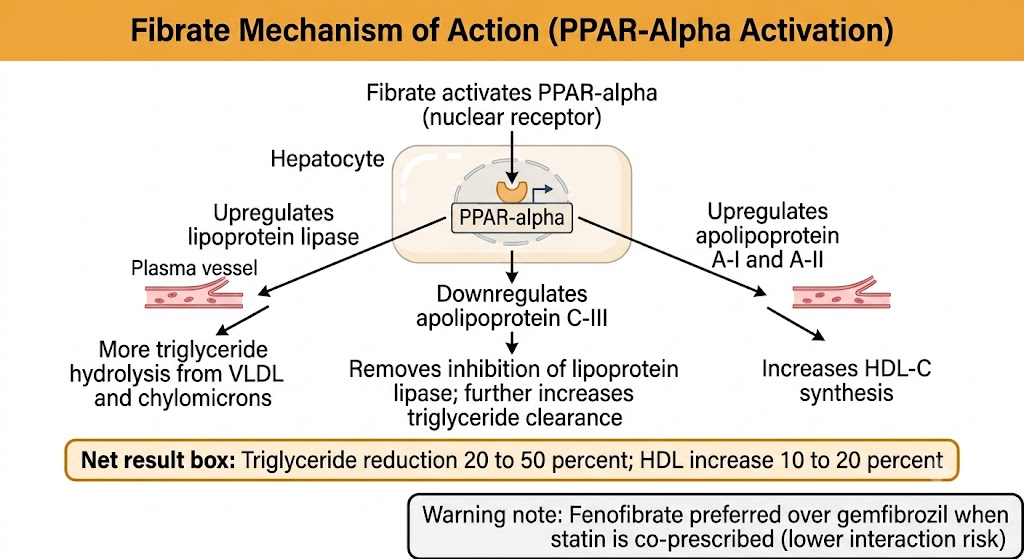
Mechanism diagram showing fibrate activation of PPAR-alpha in the hepatocyte producing three coordinated effects: upregulation of lipoprotein lipase increasing triglyceride hydrolysis from VLDL and chylomicrons, downregulation of apolipoprotein C-III removing lipoprotein lipase inhibition and further increasing triglyceride clearance, and upregulation of apolipoprotein A-I and A-II increasing HDL-C synthesis, with net result of triglyceride reduction 20 to 50 percent and HDL increase 10 to 20 percent, and a warning that fenofibrate is preferred over gemfibrozil when statin is co-prescribed.
Mechanism of action of fibrates through PPAR-alpha activation, showing coordinated effects on lipoprotein lipase, apolipoprotein C-III, and HDL synthesis. Figure generated by Gemini AI.

Mechanism of Action — Peroxisome Proliferator-Activated Receptor-Alpha Activation

Fibrates — including fenofibrate and gemfibrozil — activate peroxisome proliferator-activated receptor-alpha, a nuclear receptor found predominantly in the liver, skeletal muscle, and heart. Peroxisome proliferator-activated receptor-alpha activation produces a coordinated transcriptional program that simultaneously reduces triglyceride synthesis and increases triglyceride catabolism.

The key effects are: upregulation of lipoprotein lipase, which increases hydrolysis of triglyceride-rich very low-density lipoprotein and chylomicron particles; downregulation of apolipoprotein C-III, a natural inhibitor of lipoprotein lipase, which further enhances triglyceride clearance; and upregulation of apolipoprotein A-I and A-II, which increases high-density lipoprotein cholesterol synthesis. The net lipid result is triglyceride reduction of 20 to 50 percent and high-density lipoprotein cholesterol increase of 10 to 20 percent. The effect on low-density lipoprotein cholesterol is variable and can paradoxically increase in patients with severe hypertriglyceridemia as very low-density lipoprotein is converted to low-density lipoprotein after triglyceride hydrolysis.

Fenofibrate versus Gemfibrozil

Fenofibrate is strongly preferred over gemfibrozil in patients on statin therapy. Gemfibrozil markedly raises statin plasma concentrations by inhibiting the hepatic uptake transporter and blocking metabolic pathways that clear statins from the body, substantially increasing the risk of muscle toxicity including rhabdomyolysis. The gemfibrozil-statin combination should generally be avoided; when a fibrate is needed alongside statin therapy, fenofibrate is used because it carries substantially lower pharmacokinetic interaction risk. Fenofibrate does require dose reduction in patients with significant kidney disease due to renal excretion.

Cardiovascular Outcomes and Current Role

Large randomized trials of fibrates added to background statin therapy in patients with elevated triglycerides and low high-density lipoprotein cholesterol have not demonstrated cardiovascular event reduction. A selective peroxisome proliferator-activated receptor-alpha modulator (pemafibrate) also failed to reduce cardiovascular events despite robust triglyceride lowering in a large trial, effectively confirming that triglyceride lowering per se does not translate to cardiovascular benefit in the modern statin era.

The current role of fibrates is therefore limited primarily to severe hypertriglyceridemia — triglycerides above 500 milligrams per deciliter — where the immediate clinical priority is pancreatitis prevention rather than cardiovascular risk reduction. Fenofibrate is first-line for this indication. Fibrates are not recommended as routine add-on cardiovascular therapy in patients on statin therapy with moderately elevated triglycerides.

Key Rule — Fenofibrate, Not Gemfibrozil, with Statins

Gemfibrozil raises statin concentrations through multiple mechanisms and is associated with significantly higher rhabdomyolysis risk than fenofibrate when combined with statins. When a fibrate is clinically necessary alongside statin therapy, always use fenofibrate. Gemfibrozil should be avoided in statin-treated patients.
Section 2

Niacin (Nicotinic Acid)

Once widely used, now essentially abandoned after negative outcomes trials

Niacin has the broadest lipid-modifying profile of any drug in this chapter and is the most potent raiser of high-density lipoprotein cholesterol available. Despite this pharmacological appeal, two large randomized trials established that niacin adds no cardiovascular benefit to statin therapy while causing significant adverse effects. It is no longer recommended in routine clinical practice.

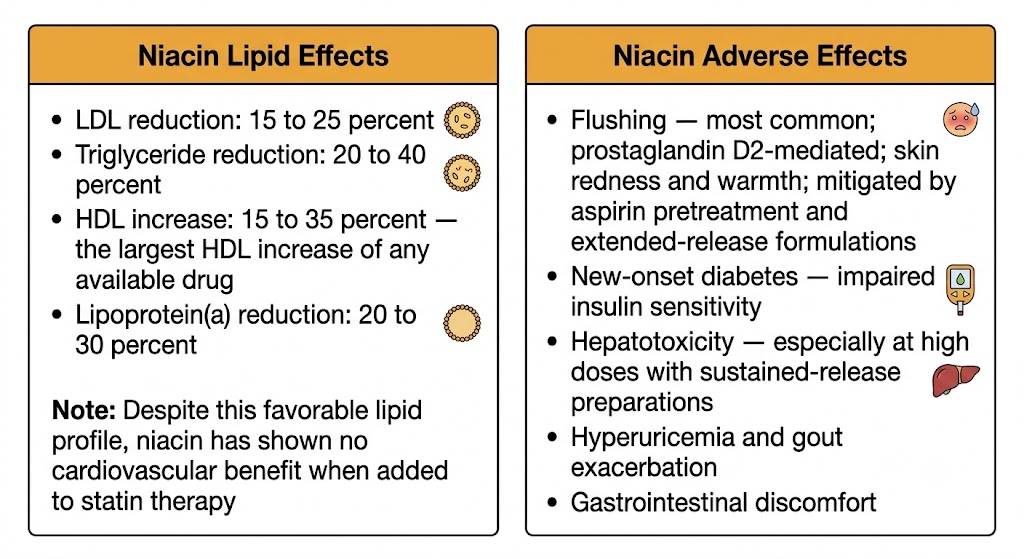
Two-panel diagram showing niacin lipid effects on the left (LDL reduction 15 to 25 percent, triglyceride reduction 20 to 40 percent, HDL increase 15 to 35 percent the largest of any drug, lipoprotein(a) reduction 20 to 30 percent, with note that no cardiovascular benefit has been shown on statin therapy) and niacin adverse effects on the right (flushing via prostaglandin D2 mitigated by aspirin pretreatment, new-onset diabetes, hepatotoxicity at high doses, hyperuricemia and gout, gastrointestinal discomfort).
Niacin pharmacology showing its broad favorable lipid effects alongside the adverse effect profile and absence of cardiovascular benefit on background statin therapy. Figure generated by Gemini AI.

Mechanism and Lipid Effects

At pharmacological doses of 1.5 to 3 grams per day, niacin acts on a receptor on fat cells that suppresses fat tissue lipolysis, reducing the release of free fatty acids to the liver. Less free fatty acid delivery to the liver reduces hepatic very low-density lipoprotein synthesis and triglyceride secretion. The downstream result is a reduction in low-density lipoprotein cholesterol, triglycerides, and lipoprotein(a), combined with an increase in high-density lipoprotein cholesterol.

The lipid effects are broad: low-density lipoprotein cholesterol reduction of 15 to 25 percent, triglyceride reduction of 20 to 40 percent, and high-density lipoprotein cholesterol increase of 15 to 35 percent. The high-density lipoprotein cholesterol increase is the largest produced by any available drug class. Niacin also reduces lipoprotein(a) by 20 to 30 percent, an effect shared with proprotein convertase subtilisin/kexin type 9 inhibitors but not statins or ezetimibe.

Why Niacin Is No Longer Used

Despite its favorable lipid profile, niacin has been shown in two large rigorous trials to provide no cardiovascular event reduction when added to statin therapy, even while producing the expected improvements in high-density lipoprotein cholesterol and triglycerides. One trial was stopped early for futility; the other showed no benefit and a significant increase in serious adverse events including new-onset diabetes, gastrointestinal complications, musculoskeletal events, and infections. These results established that raising high-density lipoprotein cholesterol pharmacologically does not reduce cardiovascular events — reinforcing the concept that high-density lipoprotein cholesterol as a biomarker does not behave as a drug target.

Niacin is not currently recommended as a first-, second-, or third-line lipid-lowering agent. Patients currently taking it without a specific indication should be considered for discontinuation.

Adverse Effects

Flushing is the most common adverse effect and the principal reason patients discontinue niacin. It is a prostaglandin D2-mediated cutaneous vasodilatory reaction causing skin redness, warmth, and itching predominantly affecting the face and upper body. It occurs in up to eighty percent of patients on immediate-release niacin. Taking aspirin thirty minutes before the niacin dose reduces flushing by blocking prostaglandin D2 synthesis. Extended-release formulations also reduce but do not eliminate flushing.

Other important adverse effects include new-onset diabetes and worsening of glucose control (through impaired insulin sensitivity), hepatotoxicity (particularly at high doses with sustained-release preparations), and hyperuricemia with gout exacerbation.

Niacin in Clinical Practice Today

Niacin is essentially abandoned for cardiovascular risk reduction in patients on statin therapy. The pharmacological profile is impressive on paper, but outcomes trial evidence has consistently shown no clinical benefit and significant harm when added to statin therapy. The clinical lesson: raising high-density lipoprotein cholesterol pharmacologically is not a therapeutic target.


Section 3

Bile Acid Sequestrants

Non-absorbed resins that lower low-density lipoprotein cholesterol through enterohepatic bile acid interruption

Bile acid sequestrants are large, non-absorbed polymeric resins that lower low-density lipoprotein cholesterol by interrupting the enterohepatic recirculation of bile acids. Their main advantage is a favorable safety profile due to lack of systemic absorption. Their main limitations are gastrointestinal tolerability and a clinically important drug absorption interaction that requires careful timing with all other medications.

Mechanism of Action

Bile acid sequestrants bind bile acids in the intestinal lumen and prevent their reabsorption into the enterohepatic circulation. Bile acids are synthesized in the liver from cholesterol, so their depletion forces the liver to convert more cholesterol into bile acids to replenish the pool. The resulting fall in hepatic cholesterol content activates the sterol regulatory element-binding protein 2 pathway — the same compensatory mechanism activated by statins and ezetimibe — upregulating low-density lipoprotein receptor expression and increasing plasma low-density lipoprotein clearance.

Bile acid sequestrants reduce low-density lipoprotein cholesterol by approximately 15 to 25 percent depending on dose and formulation. They have no systemic absorption and therefore no systemic adverse effects. However, they modestly increase triglycerides (typically five to ten percent) through compensatory upregulation of hepatic very low-density lipoprotein synthesis, which is a meaningful consideration in patients with pre-existing hypertriglyceridemia. They should not be used in patients with triglycerides above 300 milligrams per deciliter.

Available Agents

Cholestyramine and colestipol are older granular powder formulations taken dissolved in liquid. They are effective but poorly tolerated due to gritty texture and gastrointestinal adverse effects including constipation, bloating, flatulence, and nausea. Colesevelam is a newer tablet formulation with better tolerability. It also has a unique additional approved indication: modest reduction of hemoglobin A1c (approximately 0.5 percent) in type 2 diabetes, making it potentially useful in patients with combined hypercholesterolemia and diabetes who need low-density lipoprotein cholesterol lowering without systemic drug exposure.

Drug Absorption Interaction — Critical Clinical Point

Bile acid sequestrants non-specifically bind many co-ingested medications in the intestinal lumen, reducing their absorption. This affects a wide range of drugs including warfarin, thyroid hormone, digoxin, statins, fibrates, thiazide diuretics, beta-blockers, and fat-soluble vitamins. All other oral medications must be taken at least one hour before or four to six hours after the bile acid sequestrant dose to avoid significant absorption interference. This timing requirement substantially complicates use in polypharmacy patients and is a major practical limitation in the typical cardiovascular patient who may be on anticoagulation, thyroid replacement, or cardiac glycosides.

Current Clinical Role

Bile acid sequestrants occupy a narrow but defined niche. They are appropriate as adjunctive low-density lipoprotein cholesterol lowering in patients who cannot tolerate systemic agents; as the only pregnancy-compatible low-density lipoprotein cholesterol-lowering option (not systemically absorbed, no fetal risk); for pediatric familial hypercholesterolemia where systemic drug exposure is undesirable; and for combined hypercholesterolemia plus type 2 diabetes where colesevelam's dual benefit is an advantage. They are not appropriate as first-line agents in typical patients who can tolerate statins or ezetimibe.

Safe in Pregnancy — A Unique Clinical Advantage

Bile acid sequestrants are the only low-density lipoprotein cholesterol-lowering agents that are safe in pregnancy. Because they are not systemically absorbed, they carry no fetal risk. In women with familial hypercholesterolemia who cannot use statins during pregnancy, a bile acid sequestrant is the primary alternative for managing markedly elevated low-density lipoprotein cholesterol.


Section 4

Omega-3 Fatty Acids

Icosapentaenoic acid ethyl ester is proven; docosahexaenoic acid-containing products are not

The omega-3 fatty acid story in cardiovascular medicine hinges on a critical distinction between icosapentaenoic acid-only formulations and icosapentaenoic acid plus docosahexaenoic acid combinations. Only high-dose prescription icosapentaenoic acid ethyl ester has demonstrated cardiovascular event reduction. Over-the-counter fish oil products containing docosahexaenoic acid have not, and should not be substituted for the prescription product.

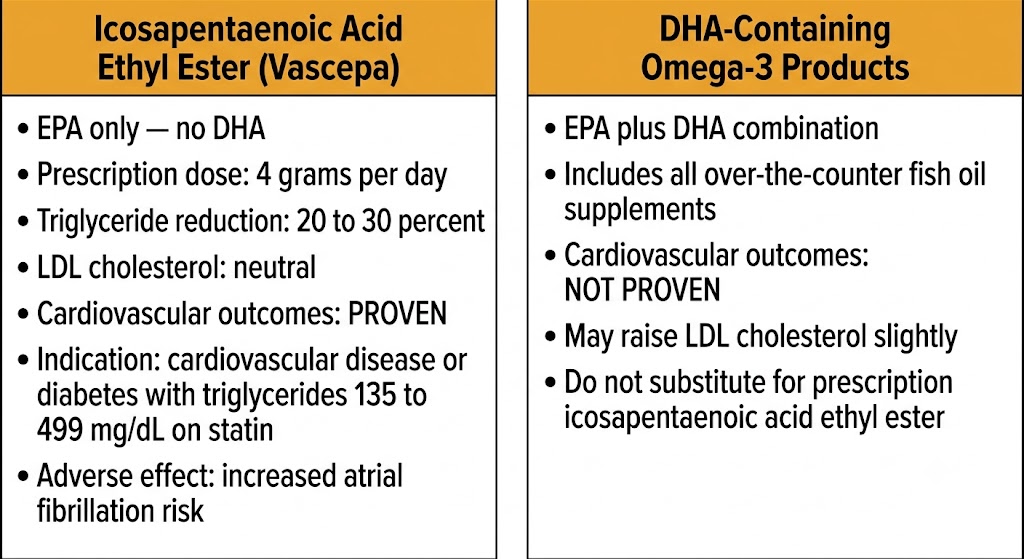
Two-panel comparison showing prescription icosapentaenoic acid ethyl ester on the left (EPA only, 4 grams per day prescription, triglyceride reduction 20 to 30 percent, LDL neutral, cardiovascular outcomes PROVEN for cardiovascular disease or diabetes with triglycerides 135 to 499 milligrams per deciliter on statin, increased atrial fibrillation risk) versus DHA-containing omega-3 products on the right (EPA plus DHA combination including all OTC fish oil, cardiovascular outcomes NOT PROVEN, may raise LDL, do not substitute for prescription icosapentaenoic acid ethyl ester).
Clinical comparison of prescription icosapentaenoic acid ethyl ester versus DHA-containing omega-3 products showing the critical difference in cardiovascular outcomes evidence. Figure generated by Gemini AI.

Icosapentaenoic Acid Ethyl Ester — The Proven Agent

Icosapentaenoic acid ethyl ester (brand name Vascepa) is a highly purified prescription formulation of icosapentaenoic acid, given at 4 grams per day (2 grams twice daily with food). At this pharmacological dose, it reduces triglycerides by approximately 20 to 30 percent and has additional effects on platelet function, vascular inflammation, and plaque stability through mechanisms that go beyond triglyceride lowering alone.

A large cardiovascular outcomes trial (REDUCE-IT) demonstrated a 25 percent reduction in major cardiovascular events when icosapentaenoic acid ethyl ester was added to statin therapy in patients with elevated triglycerides (135 to 499 milligrams per deciliter) and established atherosclerotic cardiovascular disease or diabetes with additional risk factors. This establishes icosapentaenoic acid ethyl ester 4 grams per day as an American College of Cardiology/American Heart Association Class IIa recommendation for this specific indication.

The most notable adverse effect is a modestly increased risk of atrial fibrillation, which should be discussed with patients who have pre-existing atrial fibrillation risk factors. The net cardiovascular benefit substantially outweighs this risk at a population level.

Docosahexaenoic Acid-Containing Products — Not Proven

Omega-3 formulations that contain docosahexaenoic acid — including all over-the-counter fish oil supplements — have not demonstrated cardiovascular event reduction in adequately powered randomized trials. A large trial of high-dose icosapentaenoic acid plus docosahexaenoic acid in high-risk statin-treated patients found no reduction in cardiovascular events despite robust triglyceride lowering. A primary prevention trial of low-dose icosapentaenoic acid plus docosahexaenoic acid also found no significant cardiovascular benefit.

Several mechanisms may explain the differential outcomes: docosahexaenoic acid raises low-density lipoprotein cholesterol by approximately seven to nine percent, partially offsetting cardiovascular benefit; docosahexaenoic acid may attenuate some of icosapentaenoic acid's anti-inflammatory and membrane-stabilizing effects; and the dose in the negative trials was lower or the formulation was different.

Do Not Substitute Over-the-Counter Fish Oil for Prescription Icosapentaenoic Acid Ethyl Ester

Over-the-counter fish oil products contain docosahexaenoic acid, are not dosed at 4 grams of icosapentaenoic acid per day in practice, and have not demonstrated cardiovascular benefit in clinical trials. Patients prescribed icosapentaenoic acid ethyl ester for cardiovascular risk reduction must use the prescription product — fish oil supplements are not an equivalent substitute.


Section 5

Practical Prescribing Summary

Which agents have defined roles, which have been abandoned, and an emerging agent to know

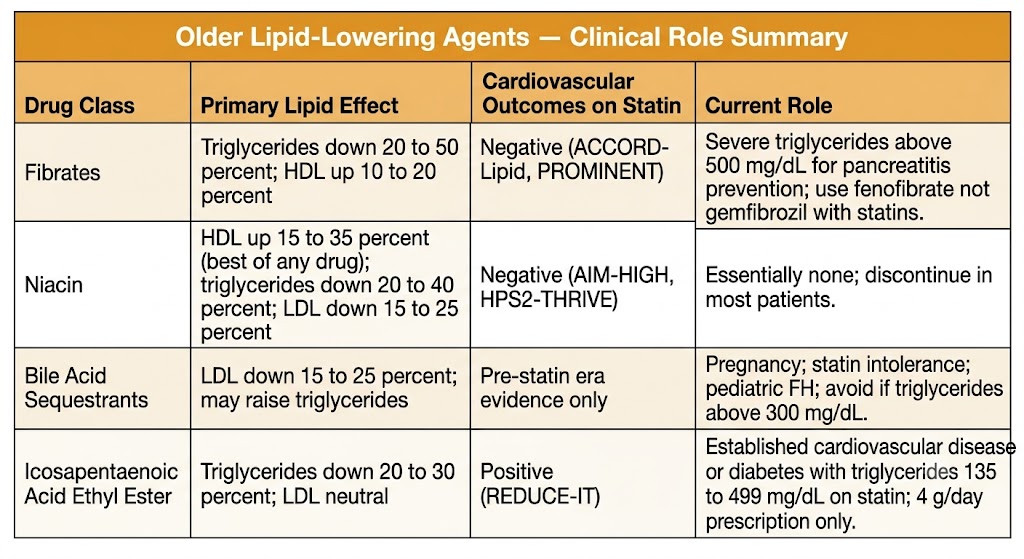
The four drug classes in this module have very different current roles in clinical practice. Understanding which agents to use, in which patients, and which to avoid is the practical takeaway from this module.

Reference table comparing four lipid-lowering drug classes: fibrates (triglycerides down 20 to 50 percent, HDL up, negative cardiovascular outcomes on statin, role limited to severe hypertriglyceridemia above 500 milligrams per deciliter, fenofibrate preferred), niacin (best HDL raiser of any drug, negative cardiovascular outcomes, essentially no current role), bile acid sequestrants (LDL down 15 to 25 percent, pre-statin era evidence, role in pregnancy and statin intolerance), and icosapentaenoic acid ethyl ester (triglycerides down 20 to 30 percent, positive REDUCE-IT, 4 grams per day prescription for cardiovascular disease or diabetes with elevated triglycerides on statin).
Comparative summary of older lipid-lowering agent classes by primary lipid effect, cardiovascular outcomes evidence on background statin, and current clinical role. Figure generated by Gemini AI.

Active role

Icosapentaenoic Acid Ethyl Ester

  • 4 g/day added to statin for established atherosclerotic cardiovascular disease or diabetes with triglycerides 135–499 mg/dL
  • Only agent in this module with proven cardiovascular event reduction
  • Class IIa recommendation (American College of Cardiology/American Heart Association)
  • Watch for atrial fibrillation risk

Limited role

Fibrates (Fenofibrate Preferred)

  • Severe hypertriglyceridemia (≥500 mg/dL) for pancreatitis prevention
  • Not recommended as add-on cardiovascular therapy on background statin
  • Always prefer fenofibrate over gemfibrozil when statin co-prescribed

Niche role

Bile Acid Sequestrants

  • Statin-intolerant patients needing low-density lipoprotein cholesterol lowering
  • Pregnancy — only safe low-density lipoprotein cholesterol-lowering option
  • Pediatric familial hypercholesterolemia
  • Time all other medications 1 hour before or 4–6 hours after
  • Avoid if triglycerides >300 mg/dL

Essentially abandoned

Niacin

  • No cardiovascular benefit on background statin despite favorable lipid effects
  • Significant adverse effects: flushing, new-onset diabetes, hepatotoxicity, hyperuricemia
  • Not recommended for cardiovascular risk reduction
  • Patients currently taking it should be considered for discontinuation

Emerging Agent — Bempedoic Acid

Bempedoic acid inhibits adenosine triphosphate-citrate lyase, an enzyme upstream of 3-hydroxy-3-methylglutaryl coenzyme A reductase in the cholesterol synthesis pathway. Because the enzyme that activates bempedoic acid is present in the liver but absent in skeletal muscle, bempedoic acid does not cause the muscle toxicity associated with statins. This makes it particularly attractive for statin-intolerant patients.

As monotherapy, bempedoic acid reduces low-density lipoprotein cholesterol by approximately 18 to 21 percent. A fixed-dose combination tablet with ezetimibe achieves approximately 38 percent reduction. A large cardiovascular outcomes trial in statin-intolerant patients with or at high risk for atherosclerotic cardiovascular disease demonstrated a significant 13 percent reduction in the primary cardiovascular composite endpoint, establishing bempedoic acid as the first oral non-statin low-density lipoprotein cholesterol-lowering agent with proven cardiovascular outcomes in statin-intolerant patients. The main adverse effects are gout and hyperuricemia (due to increased uric acid from the mechanism of action) and a small increase in tendon injury risk.

Severe Hypertriglyceridemia — A Distinct Clinical Problem

Severe hypertriglyceridemia above 500 milligrams per deciliter, particularly above 1,000 milligrams per deciliter, carries acute pancreatitis risk that is independent of its atherosclerotic cardiovascular disease implications. In this setting, triglyceride reduction for pancreatitis prevention takes immediate priority over cardiovascular risk reduction. First-line treatment is fenofibrate combined with a very-low-fat diet, alcohol cessation, and glucose optimization in diabetic patients. Icosapentaenoic acid ethyl ester may be added once triglycerides are below 500 milligrams per deciliter. Novel agents targeting apolipoprotein C-III are emerging options for the rare patients with genetic forms of severe hypertriglyceridemia.


Suggested References
Author / Organization Title Source
Staels B, Dallongeville J, Auwerx J, Schoonjans K, Leitersdorf E, Fruchart JC. Mechanism of action of fibrates on lipid and lipoprotein metabolism. Circulation. 1998;98(19):2088–2093
ACCORD Study Group; Ginsberg HN, Elam MB, Lovato LC, et al. Effects of combination lipid therapy in type 2 diabetes mellitus. N Engl J Med. 2010;362(17):1563–1574
Das Pradhan A, Glynn RJ, Fruchart JC, et al; PROMINENT Investigators. Triglyceride lowering with pemafibrate to reduce cardiovascular risk. N Engl J Med. 2022;387(21):1923–1934
HPS2-THRIVE Collaborative Group; Landray MJ, Haynes R, Hopewell JC, et al. Effects of extended-release niacin with laropiprant in high-risk patients. N Engl J Med. 2014;371(3):203–212
Insull W Jr. Clinical utility of bile acid sequestrants in the treatment of dyslipidemia: a scientific review. South Med J. 2006;99(3):257–273
Bhatt DL, Steg PG, Miller M, et al; REDUCE-IT Investigators. Cardiovascular risk reduction with icosapent ethyl for hypertriglyceridemia. N Engl J Med. 2019;380(1):11–22
Grundy SM, Stone NJ, Bailey AL, et al. 2018 AHA/ACC Guideline on the Management of Blood Cholesterol. J Am Coll Cardiol. 2019;73(24):e285–e350
Nicholls SJ, Lincoff AM, Garcia M, et al; STRENGTH Trial Investigators. Effect of high-dose omega-3 fatty acids vs corn oil on major adverse cardiovascular events in patients at high cardiovascular risk: the STRENGTH randomized clinical trial. JAMA. 2020;324(22):2268–2280
Mach F, Baigent C, Catapano AL, et al. 2019 ESC/EAS Guidelines for the management of dyslipidaemias. Eur Heart J. 2020;41(1):111–188
Manson JE, Cook NR, Lee IM, et al; VITAL Research Group. Marine n-3 fatty acids and prevention of cardiovascular disease and cancer. N Engl J Med. 2019;380(1):23–32