CHAPTER 36  ·  ANTIVIRAL PHARMACOLOGY
1. Influenza Biology · 2. Neuraminidase Inhibitors · 3. Baloxavir · 4. Adamantanes · 5. RSV Pharmacology · 6. Emerging Respiratory Antivirals ↑ Top
Module Contents
Section 1
Influenza Biology and the Rationale for Antiviral Therapy
Viral structure, replication targets, antigenic variation, and timing of treatment

Influenza viruses are negative-sense, single-stranded RNA viruses whose surface glycoproteins hemagglutinin (HA) and neuraminidase (NA) are the principal antigenic determinants and the targets of both vaccine-induced immunity and antiviral drugs. Understanding these structural proteins and the replication steps they govern explains why antivirals must be started early to be effective.

Influenza A and B viruses are enveloped viruses whose surface glycoproteins drive both pathogenesis and antiviral targeting. Hemagglutinin (HA) mediates viral attachment to sialic acid residues on respiratory epithelial cells and facilitates endosomal membrane fusion following receptor-mediated endocytosis. Neuraminidase (NA) cleaves sialic acid linkages, enabling release of newly assembled virions from infected cells and preventing viral aggregation. Influenza A viruses are classified by HA subtype (H1–H18) and NA subtype (N1–N11), with influenza A/H1N1 (H1N1) and influenza A/H3N2 (H3N2) currently circulating in humans. Antigenic drift — gradual accumulation of point mutations in HA and NA driven by immune selection — necessitates annual vaccine reformulation. Antigenic shift — reassortment of gene segments between human and animal influenza strains — produces novel subtypes with pandemic potential because pre-existing population immunity is absent.

Three pharmacological attack points are exploited by currently licensed influenza antivirals. The M2 ion channel mediates viral uncoating — this is the target of the adamantane class. The PA subunit of the viral RNA polymerase complex possesses cap-dependent endonuclease (CEN) activity required for viral mRNA synthesis — this is the target of baloxavir. Neuraminidase, required for virion release from the cell surface — this is the target of oseltamivir, zanamivir, and peramivir. The clinical benefit of influenza antivirals is strongly time-dependent: treatment initiated within 48 hours of symptom onset reduces illness duration by approximately 1–3 days and reduces the risk of complications. Treatment after 48 hours provides diminishing benefit in healthy outpatients but retains utility in hospitalized patients, elderly patients, immunocompromised hosts, and those with severe or worsening disease regardless of symptom duration.

Influenza A vs B — Antiviral Implications

Neuraminidase inhibitors (oseltamivir, zanamivir, peramivir) are active against both influenza A and B. Baloxavir is active against both A and B. Adamantanes target the M2 ion channel, which influenza B lacks entirely — adamantanes have no activity against influenza B. Additionally, currently circulating influenza A H3N2 and pandemic H1N1 (2009) strains carry near-universal adamantane resistance, making adamantanes clinically obsolete for influenza treatment.

Section 2
Neuraminidase Inhibitors: Oseltamivir and Zanamivir
Competitive NA inhibition, pharmacokinetics, resistance, and special population dosing

Neuraminidase inhibitors remain the most widely used class of influenza antivirals globally. Oseltamivir (oral) and zanamivir (inhaled) share the same mechanism — competitive inhibition of the influenza neuraminidase active site — but differ substantially in pharmacokinetic profiles and routes of administration.

Neuraminidase inhibitors are transition-state analogues that competitively bind to the conserved catalytic site of influenza neuraminidase, blocking cleavage of sialic acid residues from glycoprotein receptors on infected cell surfaces. Without neuraminidase activity, newly assembled virions remain tethered to the surface of infected cells and aggregate rather than dispersing through the respiratory tract. Drug-resistant mutations in the conserved active site typically impose substantial fitness costs, which limits their spread under natural transmission conditions. Oseltamivir carboxylate and zanamivir achieve equivalent inhibitory potency against neuraminidases from both influenza A and B viruses in vitro.
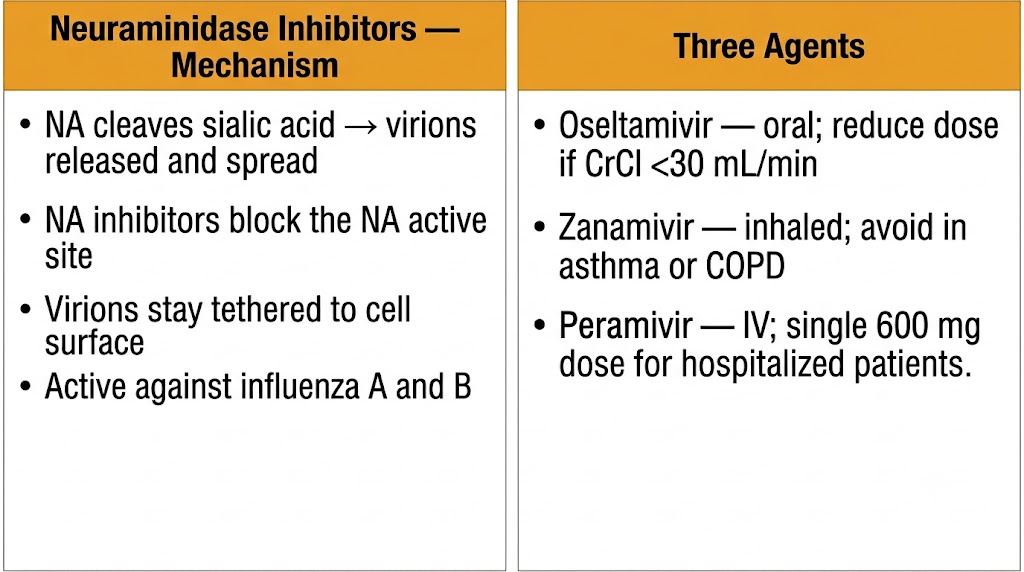
Neuraminidase inhibitor mechanism and three agents comparison

Oseltamivir phosphate is an ethyl ester prodrug hydrolyzed to oseltamivir carboxylate, the active neuraminidase inhibitor, after oral absorption. Oral bioavailability of the prodrug is approximately 80%, with systemic conversion to the active form reaching approximately 75% of the administered dose. Oseltamivir carboxylate is renally eliminated with a half-life of 6–10 hours; dose reduction is required for creatinine clearance (CrCl) below 30 mL/min. In healthy adults presenting within 48 hours of symptom onset, oseltamivir reduces median illness duration by approximately 17 hours in meta-analyses, with a more robust effect on prevention of lower respiratory tract complications in high-risk populations. Zanamivir is a highly polar molecule with negligible oral bioavailability, administered by oral inhalation using a breath-activated dry powder inhaler (Diskhaler device). Approximately 10–20% of the inhaled dose reaches the lungs directly, achieving high local drug concentrations at the site of infection while limiting systemic exposure. Systemic zanamivir is excreted unchanged by the kidneys and does not require dose adjustment for renal impairment. Inhaled delivery makes zanamivir unsuitable for patients with underlying airway disease; bronchospasm has been reported particularly in asthma or chronic obstructive pulmonary disease (COPD) — oseltamivir is preferred in this population. Peramivir is an intravenous neuraminidase inhibitor providing a parenteral route for hospitalized patients, administered as a single 600 mg intravenous dose.

The most clinically significant neuraminidase inhibitor resistance variant is the H275Y mutation in N1 neuraminidase, which confers high-level oseltamivir resistance while largely preserving zanamivir susceptibility. H275Y was responsible for the oseltamivir-resistant seasonal H1N1 epidemic of 2008–2009, in which resistant strains spread efficiently among humans without drug selection pressure, demonstrating that neuraminidase inhibitor resistance can spread in the community. Cross-resistance between oseltamivir and zanamivir is partial rather than complete for most clinically encountered NA mutations, making zanamivir or intravenous peramivir viable rescue options for oseltamivir-resistant influenza.
Section 3
Baloxavir Marboxil: Cap-Dependent Endonuclease Inhibition
Novel mechanism, single-dose efficacy, resistance emergence, and combination potential

Baloxavir marboxil represents the first influenza antiviral with a mechanism entirely distinct from neuraminidase inhibition to reach widespread clinical use, targeting a conserved viral enzyme at the earliest stage of viral replication inside the host cell nucleus. Its single-dose oral regimen and activity against neuraminidase inhibitor-resistant strains position it as an important addition to the influenza antiviral armamentarium.

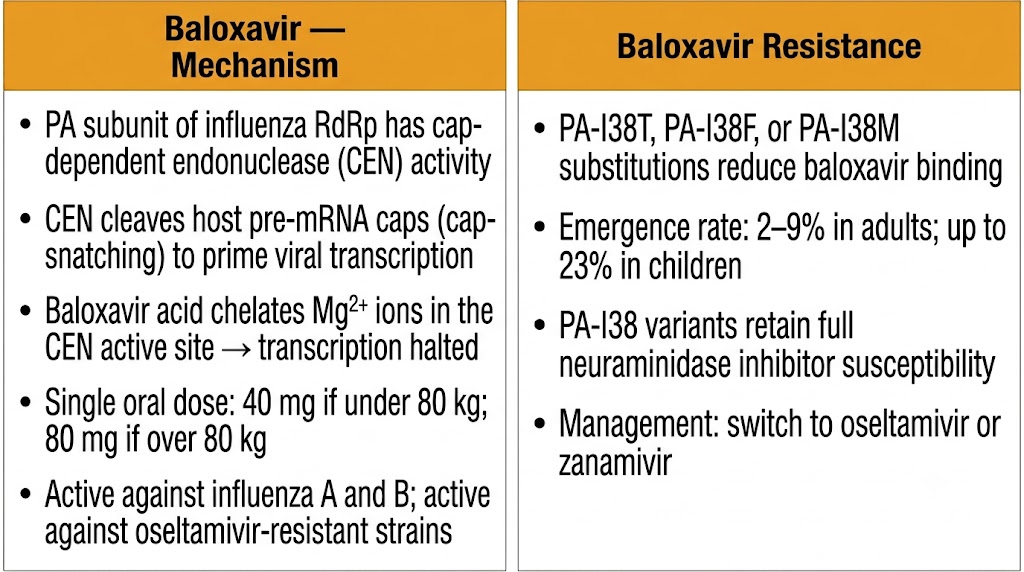
Baloxavir marboxil is an oral prodrug hydrolyzed after absorption to baloxavir acid, the active inhibitor. Baloxavir acid binds to the PA subunit of the influenza RdRp complex and specifically inhibits its cap-dependent endonuclease (CEN) activity. This cap-snatching step is required for transcription of all influenza viral genes. By blocking this initiation step, baloxavir halts production of all influenza viral proteins simultaneously. Baloxavir is administered as a single oral dose — 40 mg for patients weighing 40–80 kg and 80 mg for patients weighing above 80 kg — making it the first single-dose oral influenza treatment. The long plasma half-life of baloxavir acid (approximately 79 hours) supports this dosing strategy. Baloxavir is active against both influenza A and B and retains full activity against oseltamivir-resistant strains carrying the H275Y mutation. It is Food and Drug Administration (FDA)-approved for treatment of acute uncomplicated influenza in patients aged five years and older within 48 hours of symptom onset, and for post-exposure prophylaxis.

Baloxavir cap-dependent endonuclease mechanism and resistance

The principal resistance mechanism to baloxavir involves substitutions at position 38 of the PA subunit, which reduce baloxavir acid binding affinity for the CEN active site. These substitutions emerge during treatment in approximately 2–9% of treated adults and up to 23% of treated pediatric patients in some studies, and are associated with prolonged viral shedding and slower symptom resolution. Baloxavir-resistant strains retain full susceptibility to neuraminidase inhibitors, providing a therapeutic alternative if resistance is suspected. The combination of baloxavir plus oseltamivir is under clinical investigation for severe influenza and pandemic preparedness, providing mechanistically complementary coverage.

Section 4
Adamantanes: Clinical Obsolescence and Retained Uses
M2 ion channel blockade, universal resistance in current strains, and retained non-antiviral indications

The adamantane antiviral agents — amantadine and rimantadine — were the first licensed influenza antivirals and for decades the only oral agents available for influenza prophylaxis and treatment. Their near-complete loss of clinical utility against contemporary influenza A strains due to widespread resistance is a paradigmatic example of how antiviral resistance can render an entire drug class obsolete within a generation of widespread use.

Adamantanes block the M2 ion channel, preventing the pH-dependent viral uncoating step required for release of viral RNA into the cytoplasm. Because influenza B viruses possess a structurally distinct ion channel protein, adamantanes have no activity against influenza B viruses. Resistance is conferred by single amino acid substitutions within the M2 transmembrane domain, most commonly S31N, imposing minimal fitness cost on the virus. In 2005–2006, adamantane resistance in circulating influenza A/H3N2 strains increased from approximately 2% to 96% in a single influenza season, driven by rapid spread of a single resistant clade. The 2009 pandemic influenza A H1N1 strain also carries S31N and is universally adamantane-resistant. Current Centers for Disease Control and Prevention (CDC) and Infectious Diseases Society of America (IDSA) guidelines do not recommend adamantanes for influenza treatment or prophylaxis.

Amantadine retains important non-antiviral clinical uses that are unaffected by M2 resistance mutations. As an N-methyl-D-aspartate (NMDA) receptor antagonist and dopamine agonist at the basal ganglia, amantadine is used for Parkinson's disease, drug-induced extrapyramidal symptoms, and fatigue in multiple sclerosis, and as an adjunctive agent in disorders of consciousness following acquired brain injury. Amantadine is well absorbed orally, distributes widely including into the central nervous system (CNS), and is excreted unchanged by the kidneys with a half-life of 10–28 hours — substantial dose reduction is required for renal impairment. CNS adverse effects including insomnia, dizziness, difficulty concentrating, and at high concentrations delirium and seizures reflect its dopaminergic and glutamate antagonist properties. Rimantadine has greater hepatic metabolism, producing lower CNS drug concentrations and fewer neurological adverse effects than amantadine.

Adamantanes for Influenza — Do Not Use

Amantadine and rimantadine should not be prescribed for influenza treatment or prophylaxis. Currently circulating influenza A H3N2 and pandemic H1N1 strains are universally adamantane-resistant (S31N in M2). Adamantanes have no activity against influenza B. Use oseltamivir, zanamivir, peramivir, or baloxavir for influenza. Amantadine retains legitimate indications in Parkinson's disease, extrapyramidal symptoms, and disorders of consciousness — these non-antiviral uses are unaffected by M2 resistance mutations.

Section 5
Respiratory Syncytial Virus Pharmacology
RSV biology, ribavirin, palivizumab, nirsevimab, and the evolving treatment landscape

Respiratory syncytial virus (RSV) is the leading cause of lower respiratory tract infection in infants and young children globally and an increasingly recognized cause of serious illness in older adults and immunocompromised patients. The pharmacological armamentarium for RSV has expanded substantially with novel monoclonal antibodies transforming prophylaxis, while treatment options for established disease remain limited.

RSV is an enveloped, negative-sense, single-stranded RNA virus of the family Pneumoviridae, classified into two major antigenic groups (RSV-A and RSV-B). The two major RSV surface glycoproteins — the fusion protein (F protein) and the attachment glycoprotein (G protein) — are the principal targets of neutralizing antibody responses and antiviral drugs. The F protein mediates viral membrane fusion by undergoing a dramatic conformational change from its metastable prefusion state to a stable postfusion conformation. Antibodies that bind the prefusion conformation of the F protein are substantially more potent neutralizers than those targeting the postfusion conformation — a discovery that reshaped RSV vaccine and monoclonal antibody development.

Ribavirin is a synthetic nucleoside analogue with broad-spectrum antiviral activity through multiple incompletely understood mechanisms. Inhaled ribavirin via small-particle aerosol generator (SPAG-2 device) was licensed for RSV bronchiolitis in hospitalized infants in 1986, but evidence of clinical benefit has remained weak in randomized controlled trials, and its use has declined substantially. Current practice reserves aerosolized ribavirin for immunocompromised patients with severe RSV lower respiratory tract disease — particularly hematopoietic stem cell transplant (HSCT) recipients — where observational data suggest potential benefit in reducing progression to respiratory failure. Ribavirin is teratogenic and embryotoxic in animal models; healthcare workers of childbearing potential require respiratory protection during administration.

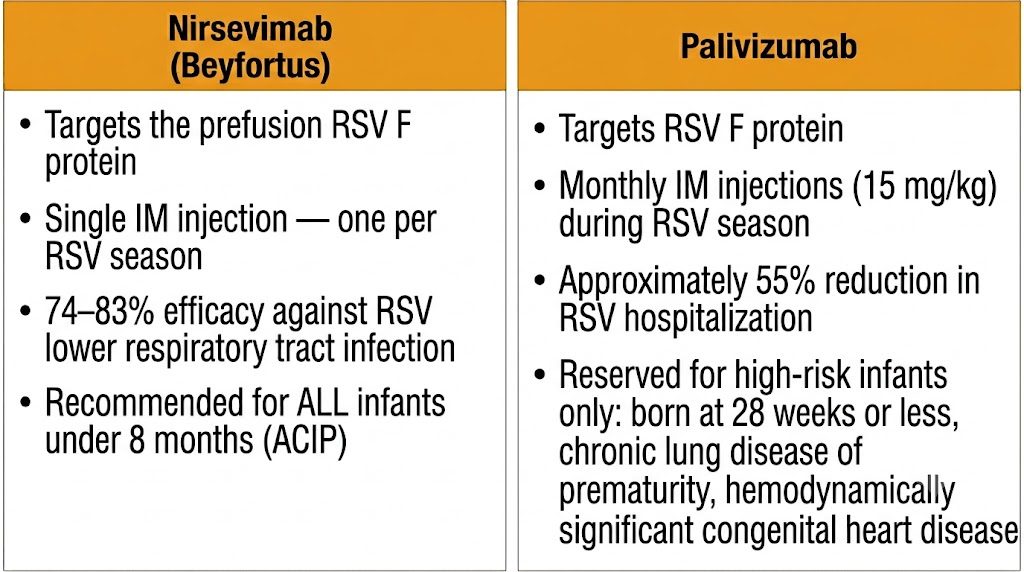
Palivizumab is a humanized monoclonal antibody targeting the RSV F protein that prevents viral membrane fusion. Monthly intramuscular injections (15 mg/kg) during RSV season reduce RSV hospitalization rates by approximately 55% in premature infants and infants with hemodynamically significant congenital heart disease or chronic lung disease of prematurity. Nirsevimab (Beyfortus), approved in 2023, is a major advance over palivizumab: it is a long-acting monoclonal antibody that targets a prefusion-specific epitope on the RSV F protein, providing protection for an entire RSV season with a single intramuscular injection rather than monthly dosing. Nirsevimab demonstrated approximately 74–83% efficacy in preventing RSV-associated lower respiratory tract infection requiring medical attention and is now recommended by the Advisory Committee on Immunization Practices (ACIP) for all infants under eight months entering their first RSV season. Palivizumab is now reserved for high-risk groups: gestational age 28 weeks or less (first year), chronic lung disease of prematurity requiring medical therapy, or hemodynamically significant congenital heart disease.

Nirsevimab versus palivizumab RSV prophylaxis comparison
Section 6
Emerging Respiratory Antivirals
Nirmatrelvir-ritonavir, remdesivir, and resistance principles for RNA respiratory viruses

The COVID-19 pandemic accelerated antiviral drug development for respiratory viruses on an unprecedented scale, producing new small molecule antivirals and monoclonal antibodies whose mechanisms illustrate general principles applicable across the respiratory virus pharmacology landscape.

Nirmatrelvir-ritonavir (Paxlovid) is an oral antiviral combination approved for treatment of mild-to-moderate COVID-19 in adults at high risk of progression to severe disease. Nirmatrelvir is a peptidomimetic inhibitor of the severe acute respiratory syndrome coronavirus 2 (SARS-CoV-2) main protease (Mpro), which cleaves the viral polyprotein precursors into functional nonstructural proteins required for viral replication. Mpro inhibition blocks processing of the replicase polyprotein, halting viral RNA synthesis. Ritonavir in this combination serves as a pharmacokinetic booster — it inhibits cytochrome P450 3A4 (CYP3A4) and P-glycoprotein (P-gp), substantially increasing nirmatrelvir plasma concentrations and extending its effective half-life. Drug-drug interactions involving CYP3A4 substrates are extensive and clinically critical: ritonavir co-administration can raise plasma concentrations of CYP3A4-metabolized drugs to potentially dangerous levels, including immunosuppressants (tacrolimus, cyclosporine), antiarrhythmics, statins (simvastatin, lovastatin), and certain anticoagulants. Clinical trials demonstrated an 89% reduction in hospitalization or death in high-risk unvaccinated adults treated within three days of symptom onset. Rebound of COVID-19 symptoms and viral load after completing the standard five-day course has been reported.

Remdesivir is a nucleotide analogue prodrug that inhibits RNA-dependent RNA polymerases (RdRp) of a broad range of RNA viruses. Remdesivir was the first antiviral approved specifically for COVID-19 (for hospitalized patients requiring supplemental oxygen) and has also been investigated for RSV and other RNA virus infections. Its clinical benefit in COVID-19 is modest but measurable in hospitalized patients requiring low-flow supplemental oxygen who have not yet progressed to mechanical ventilation. Remdesivir is administered intravenously, limiting its use to hospital settings except for a high-risk outpatient three-day course approved for patients at high risk of severe COVID-19.

RNA respiratory viruses — including influenza and coronaviruses — replicate with error-prone RNA polymerases that lack proofreading activity, generating high mutation rates. This high mutation rate means every possible single-nucleotide substitution is generated many times daily within an infected host, placing preformed resistant variants in the viral quasispecies prior to drug exposure. Drug selection amplifies resistant variants already present rather than inducing de novo mutation. The fitness cost of resistance mutations — the degree to which a mutation impairs viral replication in the absence of drug — is the primary determinant of whether resistance spreads in the population. The adamantane S31N mutation in influenza M2 imposes negligible fitness cost and spread globally; the baloxavir PA position 38 resistance mutations impose moderate fitness cost, limiting but not preventing community spread. These principles apply directly to pandemic preparedness: resistance surveillance infrastructure must be established before widespread antiviral deployment, and mechanistically diverse agents should be stockpiled to provide coverage when resistance to one class emerges.

Visual Summary  ·  Module 6 of 8
Influenza and Respiratory Virus Pharmacology
Mechanisms, resistance, and clinical use across respiratory antiviral agents
Suggested References
Author(s) Title / Source Focus
Krammer F et al. Influenza. Nat Rev Dis Primers. 2018 Influenza virology and immunology overview
von Itzstein M The war against influenza: discovery and development of sialidase inhibitors. Nat Rev Drug Discov. 2007 Neuraminidase inhibitor drug discovery
Dobson J et al. Oseltamivir treatment for influenza in adults: a meta-analysis of randomised controlled trials. Lancet. 2015 Oseltamivir efficacy meta-analysis
Hayden FG et al. Use of the oral neuraminidase inhibitor oseltamivir in experimental human influenza. JAMA. 1999 Oseltamivir clinical pharmacology
Hurt AC The epidemiology and spread of drug resistant human influenza viruses. Curr Opin Virol. 2014 Neuraminidase inhibitor resistance surveillance
Noshi T et al. In vitro characterization of baloxavir acid, a first-in-class cap-dependent endonuclease inhibitor of the influenza virus polymerase PA subunit. Antiviral Res. 2018 Baloxavir mechanism of action
Hayden FG, Sugaya N, Hirotsu N et al. Baloxavir marboxil for uncomplicated influenza in adults and adolescents. N Engl J Med. 2018 Baloxavir phase 3 trial (CAPSTONE-1)
Schwab RS et al. Amantadine in the treatment of Parkinson's disease. JAMA. 1969 Amantadine non-antiviral use in Parkinson's disease
Hammitt LL et al. Nirsevimab for prevention of RSV in healthy late-preterm and term infants. N Engl J Med. 2022 Nirsevimab efficacy trial
Waghmare A et al. Respiratory syncytial virus lower respiratory disease in hematopoietic cell transplant recipients. Clin Infect Dis. 2013 RSV in immunocompromised hosts; ribavirin use
Hammond J et al. Oral nirmatrelvir for high-risk, nonhospitalized adults with Covid-19. N Engl J Med. 2022 Nirmatrelvir-ritonavir efficacy (EPIC-HR trial)
Back to top