|
|
|
|


|
|
|
Medical Pharmacology Chapter 16: Pharmacology of Antipsychotics Drugs
|
|
|
|
|
|
|
First Generation Antipsychotic Medications
Depot Formulations16
 Non-adherence
to oral antipsychotic therapy is one of the leading drivers of relapse in
schizophrenia, with estimates suggesting that 50–75% of patients are
non-adherent within one to two years of discharge following an acute
episode.
Non-adherence
to oral antipsychotic therapy is one of the leading drivers of relapse in
schizophrenia, with estimates suggesting that 50–75% of patients are
non-adherent within one to two years of discharge following an acute
episode.
|
|
Depot (long-acting injectable) formulations address this problem by converting the medication schedule from a daily oral regimen to an injection every 2–4 weeks, administered by a clinician, eliminating covert non-adherence and allowing for direct observation of the patient at regular intervals.
The authors identified three main physician barriers:
Overestimation of injection-site side effects
Concerns about patient acceptance, and
Medical-Legal fears about removing patient "choice."
Analysis of the available evidence found that these concerns were largely unfounded: depot preparations had a side-effect profile comparable to oral formulations and were accepted by the majority of patients once the rationale was adequately explained.
Available FGA Depot Formulations
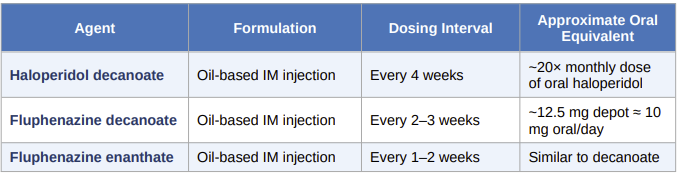
Depot initiation requires careful overlap with oral medication during the initial loading period, as peak plasma concentrations are achieved gradually (typically 4–7 days for haloperidol decanoate).
A common regimen initiates monthly injections at ≤20 times the patient's established oral daily dose (in mg), with oral supplementation continued for the first 4 weeks. Subclinical monitoring with prolactin levels, AIMS assessments, and routine labs remains as important with depot as with oral FGAs.
The APA 2021 Practice Guideline for Schizophrenia suggests long-acting injectable antipsychotics (both FGA and SGA formulations) for patients who prefer them or who have a history of poor or uncertain adherence.13
This recommendation carries a strength rating of 2B
(suggestion based on moderate evidence), reflecting a positive clinical
consensus even where RCT evidence is somewhat limited by the practical
difficulty of randomizing truly non-adherent patients.
|
|
|
|
|
|
 |
|
DISCLAIMER
|