CHAPTER 5 · ADRENERGIC PHARMACOLOGY

Section 1

Classification and Receptor Pharmacology

Non-selective, cardioselective, and third-generation agents — selectivity rationale, intrinsic sympathomimetic activity, and membrane-stabilizing activity

Beta-adrenergic antagonists are classified by receptor subtype selectivity and by the presence of additional pharmacological properties. This classification directly predicts adverse effect profile and appropriate clinical use — a second-year student who knows which generation a beta-blocker belongs to can predict whether it will cause bronchospasm, what its hemodynamic mechanism is, and which patients should not receive it.

Three Generations — Non-Selective, Cardioselective, and Third-Generation

First-generation beta-blockers are non-selective, blocking both beta-1 and beta-2 receptors without preference. The prototype is propranolol. Non-selective blockade is clinically significant because beta-2 receptors mediate bronchodilation in airway smooth muscle and vasodilation in peripheral vasculature — blocking them causes bronchoconstriction and peripheral vasoconstriction in susceptible patients.

Second-generation agents are cardioselective, preferentially blocking beta-1 receptors while relatively sparing beta-2 receptors at standard doses. Prototypes include metoprolol, atenolol, and bisoprolol. This selectivity is relative and dose-dependent: at higher doses, beta-2 blockade becomes clinically significant even with cardioselective agents. The clinical advantage is reduced risk of bronchospasm and peripheral vasoconstriction compared with non-selective agents, though asthma remains an absolute contraindication for all beta-blockers regardless of selectivity.

Third-generation agents combine beta-blockade with additional vasodilatory mechanisms. Carvedilol adds alpha-1 blockade, providing direct arterial vasodilation on top of cardiac beta-blockade. Labetalol similarly combines alpha-1 and non-selective beta blockade. Nebivolol at higher doses generates nitric oxide-mediated vasodilation through endothelial pathways. The net result in all three is blood pressure reduction through both reduced cardiac output and reduced peripheral vascular resistance — a hemodynamic advantage in patients with HFrEF and coexisting hypertension.
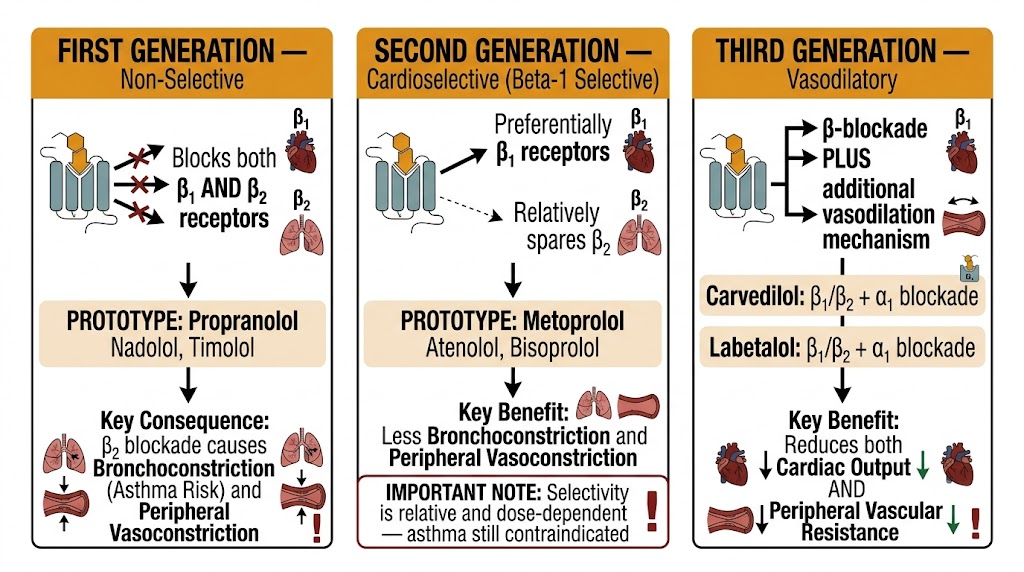
Three-panel comparison of first-generation non-selective beta-blockers (propranolol — bronchoconstriction and peripheral vasoconstriction risk), second-generation cardioselective beta-1 selective agents (metoprolol, atenolol, bisoprolol — less bronchoconstriction; asthma still contraindicated), and third-generation vasodilatory agents (carvedilol, labetalol — beta plus alpha-1 blockade reducing cardiac output and peripheral vascular resistance).
Beta-blocker classification by generation: first-generation non-selective, second-generation cardioselective, and third-generation vasodilatory agents showing receptor selectivity and clinical consequences. Source: Gemini AI, generated for educational use.
Intrinsic Sympathomimetic Activity

Some beta-blockers are partial agonists at the beta receptor — they bind and partially activate the receptor while simultaneously blocking the effects of full agonists (epinephrine, norepinephrine). This property is called intrinsic sympathomimetic activity. Agents with intrinsic sympathomimetic activity (pindolol, acebutolol) produce less resting bradycardia because basal receptor activation is partially maintained. However, these agents have not demonstrated the mortality benefit in post-myocardial infarction or HFrEF populations that pure antagonists have, and they are not preferred for these indications.

Membrane-Stabilizing Activity

Several beta-blockers (propranolol, acebutolol) have membrane-stabilizing activity — sodium channel blockade independent of beta-receptor antagonism, producing a quinidine-like effect that slows spontaneous depolarization. At therapeutic doses, this property is pharmacologically irrelevant because the concentrations needed for meaningful sodium channel blockade far exceed those producing beta-blockade. However, in massive overdose, membrane-stabilizing activity becomes clinically significant, contributing to wide-complex arrhythmias and profound cardiac depression in propranolol poisoning. Treatment of propranolol overdose includes intravenous sodium bicarbonate (to overcome sodium channel blockade, similar to tricyclic antidepressant overdose) and intravenous lipid emulsion.
Section 2

Lipophilicity and Pharmacokinetics

Hepatic versus renal elimination, central nervous system penetration, and clinical decision rules for drug selection by organ function

A single physicochemical property — lipophilicity — determines whether a beta-blocker is eliminated by the liver or the kidney, whether it penetrates the central nervous system, and which patients are at risk for drug accumulation. Understanding this spectrum directly informs drug selection in patients with renal impairment, hepatic impairment, or central nervous system sensitivity.

Lipophilic Agents — Hepatic Metabolism, Central Nervous System Effects

Propranolol and metoprolol are lipophilic. They undergo extensive first-pass hepatic metabolism, have relatively short half-lives requiring multiple daily doses (mitigated by extended-release formulations for metoprolol), and penetrate the central nervous system substantially. Central nervous system adverse effects — fatigue, sleep disturbance, vivid dreams, nightmares, and depression — are most common with these agents. Lipophilic agents require dose reduction in hepatic impairment but are not significantly affected by renal function and are not removed by hemodialysis.

Hydrophilic Agents — Renal Elimination, Minimal Central Nervous System Effects

Atenolol and nadolol are hydrophilic. They undergo minimal hepatic metabolism and are excreted largely unchanged by the kidney, with longer half-lives allowing once-daily dosing. Poor central nervous system penetration means substantially fewer central nervous system adverse effects — these are preferred when sleep disturbance or mood changes are a concern. The critical vulnerability: hydrophilic agents accumulate in renal impairment, requiring dose interval extension in patients with significantly reduced glomerular filtration rates. They are removed by hemodialysis and require supplemental dosing after dialysis sessions.

Drug Selectivity Lipophilicity Elimination Central Nervous System Effects Dose Adjustment
Propranolol Non-selective High Hepatic Significant Hepatic impairment
Nadolol Non-selective Low Renal Minimal Renal impairment
Metoprolol Beta-1 selective High Hepatic Moderate Hepatic impairment
Atenolol Beta-1 selective Low Renal Minimal Renal impairment
Bisoprolol Beta-1 selective Intermediate Hepatic + renal (50/50) Low Severe combined impairment
Carvedilol Non-selective + alpha-1 High Hepatic Moderate Hepatic impairment

Lipophilicity — Clinical Decision Rules

Central nervous system effects concern (sleep disturbance, depression, vivid dreams): choose a hydrophilic agent — atenolol, nadolol, bisoprolol.

Hepatic impairment: avoid highly lipophilic agents (propranolol, metoprolol); prefer renally cleared agents (atenolol, nadolol).

Renal impairment or hemodialysis: avoid hydrophilic agents (atenolol, nadolol, which accumulate); prefer hepatically metabolized agents (propranolol, metoprolol, carvedilol).


Section 3

Cardiovascular Clinical Applications

Hypertension, angina, post-myocardial infarction, heart failure with reduced ejection fraction, and arrhythmias

Beta-blockers have established mortality benefit across multiple cardiovascular conditions, but the mechanism underlying benefit differs in each setting. Knowing which mechanism applies to which condition explains why certain agents are preferred, why the class is not interchangeable across indications, and why beta-blockers in heart failure are counterintuitive but effective.

Hypertension

Beta-blockers lower blood pressure by reducing heart rate and cardiac output, inhibiting renin release from juxtaglomerular cells (reducing angiotensin II and aldosterone), and — for lipophilic agents — suppressing central sympathetic outflow. Despite these mechanisms, beta-blockers are no longer recommended as first-line therapy for uncomplicated hypertension: meta-analyses have shown inferior reduction in stroke and mortality compared with diuretics, angiotensin-converting enzyme inhibitors, and calcium channel blockers.

They retain a strong first-line position when hypertension coexists with a compelling indication: post-myocardial infarction, HFrEF, angina, atrial fibrillation with rapid ventricular response, or hyperthyroidism. In these settings the beta-blocker addresses both the blood pressure and the underlying pathological process simultaneously.

Angina

In stable ischemic heart disease, beta-blockers reduce myocardial oxygen demand by slowing heart rate, reducing contractility, and lowering blood pressure. Slower heart rate also lengthens diastole, increasing coronary perfusion time and improving oxygen delivery to vulnerable subendocardial tissue. Beta-blockers are first-line therapy for chronic stable angina. In vasospastic (Prinzmetal) angina, non-selective agents are avoided because beta-2 blockade in coronary vessels leaves alpha-1-mediated vasoconstriction unopposed, potentially worsening coronary spasm. Calcium channel blockers are preferred in this setting.

Post-Myocardial Infarction

Beta-blockers reduce mortality after myocardial infarction through suppression of the catecholamine surge that drives arrhythmias, reduction in infarct extension from decreased myocardial oxygen demand, and antifibrillatory effects from prolonged refractory periods. This is one of the most robustly established mortality benefits in cardiovascular medicine. Current guidelines recommend initiating oral beta-blocker therapy within the first 24 hours in hemodynamically stable patients without contraindications, and continuing for at least three years. Agents with demonstrated evidence include metoprolol, atenolol, carvedilol, and propranolol.

Heart Failure with Reduced Ejection Fraction — The Counterintuitive Benefit

Beta-blockers improve survival in HFrEF despite being negative inotropes — an apparent paradox explained by the mechanism of harm in chronic heart failure. Sustained sympathetic overactivation in heart failure causes progressive beta-1 receptor downregulation, mitochondrial dysfunction, myocyte apoptosis, and maladaptive ventricular hypertrophy. Beta-blockade interrupts this cycle, allowing gradual receptor resensitization, reverse remodeling of the left ventricle, and improved ejection fraction over months of therapy.

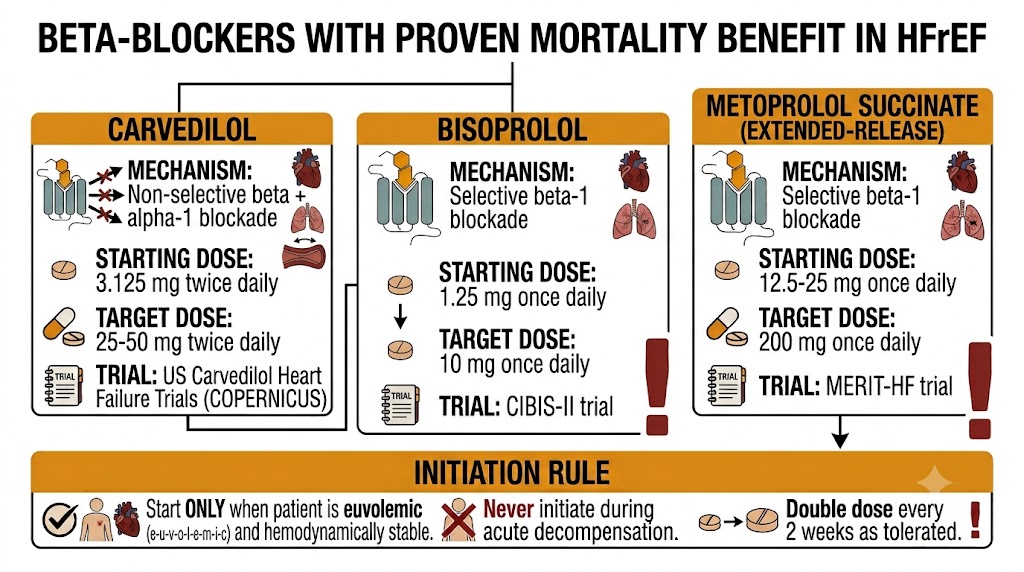
Three specific agents have demonstrated mortality benefit in large randomized trials and are the only agents guideline-endorsed for HFrEF: carvedilol, bisoprolol, and extended-release metoprolol succinate. Other beta-blockers should not be substituted — the evidence base is agent-specific, not class-wide. These drugs must be initiated only when the patient is clinically stable and euvolemic — never during acute decompensation or cardiogenic shock. Starting doses are very low and doubled every two weeks as tolerated to target doses.

Three-panel diagram of the only beta-blockers with proven HFrEF mortality benefit: carvedilol (US Carvedilol Heart Failure Trials/COPERNICUS), bisoprolol (CIBIS-II), and extended-release metoprolol succinate (MERIT-HF), with starting and target doses and the shared initiation rule requiring euvolemic stability before starting.
Beta-blockers with proven mortality benefit in HFrEF: carvedilol, bisoprolol, and extended-release metoprolol succinate — mechanisms, doses, supporting trials, and the shared initiation rule. Source: Gemini AI, generated for educational use.
Arrhythmias

Beta-blockers exert class II antiarrhythmic effects by slowing sinoatrial node automaticity and prolonging atrioventricular node conduction and refractoriness. These actions make them the primary pharmacological tool for rate control in atrial fibrillation with rapid ventricular response, and for termination of atrioventricular nodal reentrant tachycardia. Propranolol is the preferred agent for arrhythmias caused by thyroid storm, pheochromocytoma (after alpha blockade is established), and catecholamine-triggered ventricular arrhythmias.


Section 4

Carvedilol, Labetalol, and Non-Cardiovascular Uses

Third-generation vasodilatory mechanisms, hypertensive emergency in pregnancy, thyroid storm, glaucoma, and essential tremor

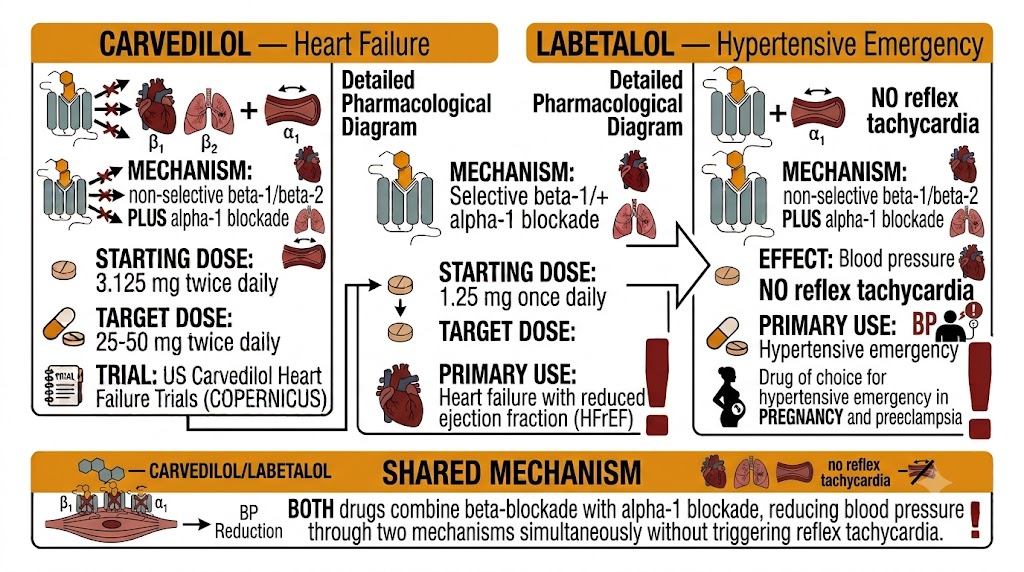
Carvedilol and labetalol share the same dual receptor mechanism — alpha-1 plus non-selective beta blockade — but their primary clinical contexts differ. Carvedilol is the cornerstone of HFrEF pharmacotherapy; labetalol is the vasopressor-control agent of choice in hypertensive emergencies in pregnancy. Several beta-blockers also have important non-cardiovascular applications that exploit their autonomic pharmacology.

Comparison of carvedilol (heart failure with reduced ejection fraction) and labetalol (hypertensive emergency, drug of choice in pregnancy and preeclampsia) as third-generation dual alpha-1 and non-selective beta blockers, with shared mechanism box showing both reduce blood pressure without reflex tachycardia.
Carvedilol versus labetalol: shared dual alpha-1 and non-selective beta blockade mechanism producing blood pressure reduction without reflex tachycardia, with distinct primary uses in HFrEF and hypertensive emergency. Source: Gemini AI, generated for educational use.
Carvedilol — HFrEF and Hemodynamic Profile

Carvedilol combines non-selective beta-1 and beta-2 blockade with alpha-1 blockade. The alpha-1 component adds direct arterial vasodilation, reducing peripheral vascular resistance in addition to the cardiac output reduction from beta-blockade. This dual mechanism is particularly advantageous in HFrEF with coexisting hypertension, where afterload reduction augments the therapeutic effect. Carvedilol is highly lipophilic and should be taken with food to reduce peak plasma concentrations and minimize dizziness from orthostatic hypotension.

Labetalol — Hypertensive Emergency and Pregnancy

Labetalol shares carvedilol's dual alpha-1 and non-selective beta-blockade mechanism. The combined reduction in cardiac output and peripheral vascular resistance lowers blood pressure without triggering reflex tachycardia — an important advantage over pure vasodilators, which activate the baroreceptor reflex and cause compensatory tachycardia. Labetalol is one of the preferred agents for hypertensive emergencies and is the drug of choice for hypertensive emergencies in pregnancy and preeclampsia, where it effectively controls blood pressure without significantly compromising fetal circulation or causing fetal bradycardia to the degree seen with other agents.

Propranolol — Non-Cardiovascular Applications

Propranolol has several important non-cardiovascular uses that exploit specific aspects of its pharmacology. In thyroid storm, propranolol addresses two problems simultaneously: it blocks the adrenergically mediated symptoms produced by thyroid hormone-induced beta-receptor upregulation (tachycardia, tremor, anxiety, hypertension), and it inhibits peripheral conversion of thyroxine to the more active triiodothyronine by blocking type 1 deiodinase. This second mechanism is unique to propranolol among beta-blockers — cardioselective agents lack it — making propranolol the preferred beta-blocker in thyroid storm.

For essential tremor, propranolol is one of two first-line agents (alongside primidone), reducing tremor amplitude through blockade of beta-2 receptors in peripheral muscle spindles and through central mechanisms. For migraine prophylaxis, propranolol reduces attack frequency through mechanisms that include reduction in sympathetically driven cerebrovascular reactivity.

Glaucoma — Topical Beta-Blockers

Topical beta-blockers (timolol, betaxolol) are first-line therapy for primary open-angle glaucoma, reducing intraocular pressure by decreasing aqueous humor production from the ciliary epithelium, which expresses beta-2 receptors that normally stimulate fluid secretion. A critical safety note: topical ophthalmic beta-blockers can produce clinically significant systemic beta-blockade through absorption via the nasolacrimal drainage system, causing bradycardia and bronchospasm. Patients with asthma, chronic obstructive pulmonary disease, or conduction disease must be evaluated carefully before topical beta-blocker use, and betaxolol (beta-1 selective) is preferred over timolol (non-selective) in these patients.


Section 5

Adverse Effects, Contraindications, and Drug Interactions

Bradycardia, bronchospasm, metabolic effects, withdrawal syndrome, and key pharmacodynamic interactions

The adverse effects of beta-blockers are mechanistically predictable extensions of their receptor pharmacology. Knowing which receptor subtype is blocked at which location explains every major adverse effect — and explains why certain patient populations cannot safely receive this drug class.

Bradycardia and Atrioventricular Block

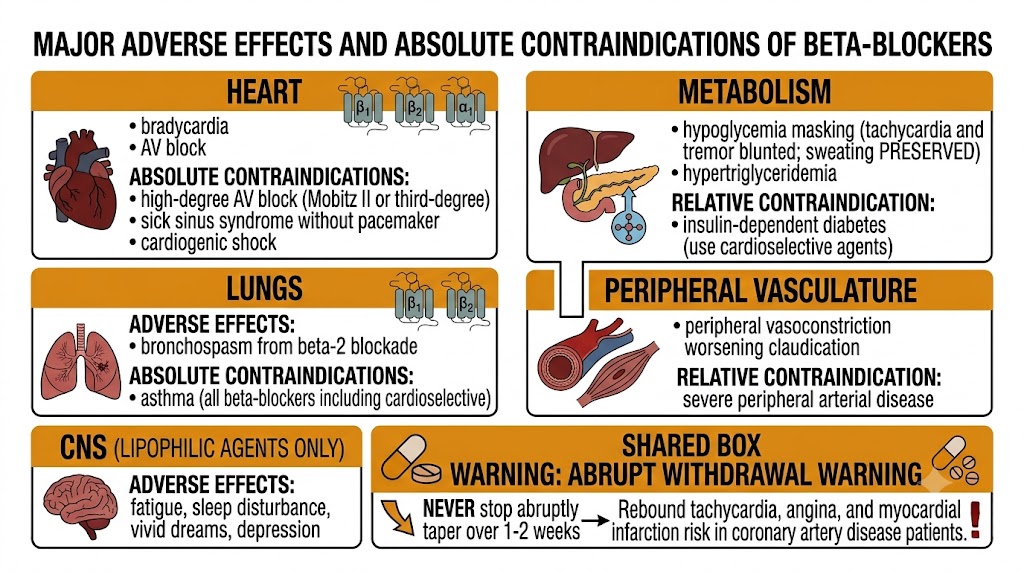
Negative chronotropy and negative dromotropy from beta-1 blockade are extensions of the therapeutic mechanism and represent the most common dose-limiting adverse effects. Symptomatic bradycardia at rest requires dose reduction or discontinuation. High-degree atrioventricular block (Mobitz type II or third-degree block) is an absolute contraindication to beta-blocker initiation, as further suppression of atrioventricular conduction can produce asystole. Sick sinus syndrome is similarly an absolute contraindication unless the patient has a functioning pacemaker. The risk of severe bradycardia is compounded by co-administration with other nodal-slowing agents — verapamil, diltiazem, digoxin, and amiodarone — combinations that require close monitoring.

Bronchospasm

Beta-2 blockade in airway smooth muscle reduces bronchodilatory tone and can precipitate life-threatening bronchospasm. Asthma is an absolute contraindication to all beta-blockers — including cardioselective agents, because even relative beta-1 selectivity does not provide complete protection in a highly reactive airway. Chronic obstructive pulmonary disease without significant reversible bronchospasm is a relative contraindication: low doses of cardioselective agents (bisoprolol, metoprolol) may be cautiously used when cardiovascular benefit clearly outweighs pulmonary risk, as in post-myocardial infarction or HFrEF. Topical ophthalmic beta-blockers can cause systemic bronchospasm via nasolacrimal absorption and require the same precautions.

Metabolic Effects — Hypoglycemia Masking

Beta-blockers blunt the adrenergically mediated warning signs of hypoglycemia — tachycardia, palpitations, and tremor — in patients treated with insulin or insulin secretagogues. A critical clinical point: sweating is a cholinergically mediated response and is preserved, making it potentially the only remaining warning sign of hypoglycemia in a beta-blocked patient. Non-selective agents additionally impair glucagon-stimulated glycogenolysis and can prolong hypoglycemic episodes. Cardioselective agents are preferred in patients with insulin-dependent diabetes because beta-2-mediated glycogenolysis in the liver is relatively preserved.

Non-selective beta-blockers also increase triglycerides and reduce high-density lipoprotein cholesterol. Third-generation vasodilatory agents (carvedilol, nebivolol) have more metabolically neutral or favorable lipid profiles.

Organ-system summary of beta-blocker adverse effects and contraindications: cardiac (bradycardia, AV block, absolute contraindications), pulmonary (bronchospasm — asthma absolutely contraindicated including cardioselective agents), metabolic (hypoglycemia masking with sweating preserved), peripheral vascular, CNS effects for lipophilic agents, and abrupt withdrawal syndrome warning.
Major adverse effects and absolute contraindications of beta-blockers organized by organ system, with abrupt withdrawal warning. Source: Gemini AI, generated for educational use.
Withdrawal Syndrome — Never Stop Abruptly

Chronic beta-blocker therapy causes upregulation of beta-adrenergic receptors in response to sustained blockade. Abrupt discontinuation exposes these upregulated, supersensitive receptors to normal circulating catecholamine levels, producing rebound tachycardia, hypertension, worsening angina, and — in patients with coronary artery disease — a real risk of myocardial infarction or sudden cardiac death. Beta-blockers must always be tapered gradually over one to two weeks whenever discontinuation is necessary. If urgent surgery or a procedure requires temporary cessation, the patient must be closely monitored for rebound cardiovascular events and the drug restarted as soon as feasible.

Key Drug Interactions

The most clinically hazardous pharmacodynamic interaction is the combination of beta-blockers with non-dihydropyridine calcium channel blockers — specifically verapamil and diltiazem, which slow sinoatrial and atrioventricular nodal conduction by independent mechanisms. Co-administration can produce severe bradycardia, high-degree atrioventricular block, or asystole. Intravenous verapamil should never be given to a patient receiving a beta-blocker. Additive nodal depression also occurs with digoxin and amiodarone.

Non-selective beta-blockers combined with epinephrine (as in anaphylaxis or local anesthetic use) produce the same unopposed alpha-1 vasoconstriction described in Module 2: beta-2-mediated vasodilation is blocked while alpha-1 vasoconstriction is unimpeded, causing paradoxical severe diastolic hypertension. Non-steroidal anti-inflammatory drugs blunt the antihypertensive efficacy of beta-blockers through prostaglandin-mediated sodium retention and vasoconstriction.

Absolute Contraindications to Beta-Blockers

Asthma — all beta-blockers, including cardioselective agents. Selectivity does not provide adequate protection in a hyperreactive airway.

High-degree atrioventricular block (Mobitz type II or third-degree) without a functioning pacemaker.

Sick sinus syndrome without a functioning pacemaker.

Cardiogenic shock or acute decompensated heart failure requiring inotropic support.

Severe symptomatic bradycardia at baseline.

Chronic obstructive pulmonary disease without significant reversibility, mild to moderate peripheral arterial disease, and well-controlled diabetes are relative contraindications where cardioselective agents may be used cautiously when benefit outweighs risk.


Suggested References
Author / Organization Title Source
Westfall TC, Westfall DP Adrenergic agonists and antagonists. In: Brunton LL, et al., eds. Goodman & Gilman’s: The Pharmacological Basis of Therapeutics, 13th ed. McGraw-Hill; 2018:191–224
Frishman WH Beta-adrenergic receptor blockers: adverse effects and drug interactions Hypertension. 1988;11(3 Pt 2):II21–II29
Frishman WH Clinical pharmacology of the new beta-adrenergic blocking drugs. Part 1. Pharmacodynamic and pharmacokinetic properties Am Heart J. 1979;97(5):663–670
MERIT-HF Study Group Effect of metoprolol CR/XL in chronic heart failure: Metoprolol Controlled-Release/Extended-Release Randomised Intervention Trial in Congestive Heart Failure (MERIT-HF) Lancet. 1999;353(9169):2001–2007
Cleland JG, Bristow MR, Erdmann E, Remme WJ, Swedberg K, Waagstein F Beta-blocking agents in heart failure. Should they be used and how? Eur Heart J. 1996;17(11):1629–1639
CIBIS-II Investigators and Committees The Cardiac Insufficiency Bisoprolol Study II (CIBIS-II): a randomised trial Lancet. 1999;353(9146):9–13
Wiysonge CS, Bradley HA, Volmink J, Mayosi BM, Opie LH Beta-blockers for hypertension Cochrane Database Syst Rev. 2017;1(1):CD002003
Echt DS, Liebson PR, Mitchell LB, et al. Mortality and morbidity in patients receiving encainide, flecainide, or placebo. The Cardiac Arrhythmia Suppression Trial N Engl J Med. 1991;324(12):781–788
Packer M, Bristow MR, Cohn JN, et al. The effect of carvedilol on morbidity and mortality in patients with chronic heart failure N Engl J Med. 1996;334(21):1349–1355
Magee LA, Cham C, Waterman EJ, Ohlsson A, von Dadelszen P Hydralazine for treatment of severe hypertension in pregnancy: meta-analysis BMJ. 2003;327(7421):955–960
Johnson JA, Burlew BS Metoprolol metabolism via cytochrome P4502D6 in ethnic populations Drug Metab Dispos. 1996;24(3):350–355