Corticosteroids in alcoholic hepatitis, resmetirom and emerging MASH therapies, UDCA and obeticholic acid in cholestatic disease, and lactulose-rifaximin in hepatic encephalopathy
GAST · Module 7 of 8Maddrey discriminant function as the treatment decision threshold, prednisolone in severe alcoholic hepatitis, the Lille model for identifying non-responders at day 7, and pentoxifylline as an alternative with limited evidence
Alcoholic hepatitis is an acute inflammatory injury to the liver superimposed on alcohol-related liver disease, ranging from mild to a life-threatening syndrome with high short-term mortality. Pharmacological treatment is reserved for severe disease, defined by objective scoring criteria, and prednisolone is the only drug with a survival benefit in randomized controlled trials.
The Maddrey discriminant function is the most widely used severity scoring tool for alcoholic hepatitis. It is calculated as 4.6 multiplied by (the patient's prothrombin time minus control prothrombin time in seconds) plus the serum bilirubin in micromoles per liter divided by 17.1. A discriminant function of 32 or greater defines severe alcoholic hepatitis and identifies patients with a 28-day mortality exceeding 30 to 35 percent without treatment. This threshold also identifies the patients most likely to benefit from corticosteroid therapy. The Model for End-Stage Liver Disease score and the Glasgow Alcoholic Hepatitis Score are alternative severity indices used in some centers and guidelines.
Prednisolone 40 milligrams daily for 28 days is the standard treatment for severe alcoholic hepatitis with a discriminant function of 32 or greater, supported by meta-analyses of randomized controlled trials demonstrating a reduction in 28-day mortality compared with placebo or supportive care alone. The mechanism is suppression of the hepatic inflammatory cytokine cascade, particularly tumor necrosis factor-alpha and interleukin-8, which drive hepatocyte apoptosis and necrosis in severe alcoholic hepatitis. Active infection — particularly spontaneous bacterial peritonitis, urinary tract infection, or occult sepsis — must be excluded before starting prednisolone, as immunosuppression in the presence of active infection substantially worsens outcomes. Hepatitis B virus co-infection is also a contraindication to corticosteroid therapy in this setting due to risk of hepatitis B reactivation.
Early response to prednisolone is assessed using the Lille model at day 7. The Lille score incorporates baseline bilirubin, day-7 bilirubin, and clinical variables; a score above 0.45 identifies non-responders with a poor prognosis despite corticosteroid continuation. The STOPAH (Steroids or Pentoxifylline for Alcoholic Hepatitis) trial, the largest randomized controlled trial in alcoholic hepatitis, demonstrated that prednisolone reduced 28-day mortality but this benefit was not maintained at 90 days or 1 year, highlighting that corticosteroids improve early survival without altering the underlying disease trajectory.
Pentoxifylline, a phosphodiesterase inhibitor that reduces tumor necrosis factor-alpha production, was previously used as an alternative to prednisolone when corticosteroids were contraindicated, based on early data suggesting reduced hepatorenal syndrome risk. The STOPAH trial demonstrated that pentoxifylline had no significant effect on 28-day, 90-day, or 1-year mortality compared with placebo, and it is no longer recommended as a treatment for severe alcoholic hepatitis. Nutritional support — enteral feeding targeting 35 to 40 kilocalories per kilogram per day — is an important supportive measure, as malnutrition is nearly universal in severe alcoholic hepatitis and independently predicts mortality.
Calculate Maddrey discriminant function. Discriminant function below 32: supportive care, nutritional support, abstinence counseling; corticosteroids not indicated. Discriminant function 32 or above: exclude active infection and hepatitis B co-infection; if safe, start prednisolone 40 milligrams daily. Assess Lille score at day 7: Lille score above 0.45 identifies non-responders; consider stopping prednisolone and evaluating for liver transplantation if appropriate. Abstinence from alcohol is the single most important determinant of long-term outcome regardless of treatment.
The renaming of NAFLD/NASH to MASLD/MASH, lifestyle modification as the primary treatment, vitamin E and pioglitazone in selected patients, resmetirom as the first FDA-approved MASH drug, and the emerging role of GLP-1 receptor agonists
Metabolic dysfunction-associated steatotic liver disease (MASLD) and its inflammatory subtype metabolic dysfunction-associated steatohepatitis (MASH) affect approximately 25 percent of the global population and are the leading causes of chronic liver disease in developed countries. Until recently, no pharmacological therapy had received regulatory approval for MASH; resmetirom became the first FDA-approved drug specifically for this indication in 2024.
Weight loss through caloric restriction and increased physical activity remains the primary and most effective treatment for MASLD and MASH. A sustained weight loss of 7 to 10 percent of body weight produces histological improvement in hepatic steatosis, inflammation, and fibrosis in the majority of patients. Weight loss exceeding 10 percent achieves fibrosis regression in a substantial proportion. The challenge is long-term adherence; most patients regain weight within 2 to 5 years, and histological improvements reverse with weight regain.
Vitamin E at 800 international units daily improved hepatic steatosis, inflammation, and ballooning in non-diabetic patients with biopsy-proven MASH in the PIVENS (Pioglitazone versus Vitamin E versus Placebo for the Treatment of Nondiabetic Patients with Nonalcoholic Steatohepatitis) randomized controlled trial, but did not improve fibrosis. It is an option for non-diabetic, non-cirrhotic patients with biopsy-confirmed MASH who cannot be included in clinical trials. Concerns about long-term all-cause mortality and prostate cancer risk at high doses limit its use.
Pioglitazone, a peroxisome proliferator-activated receptor-gamma agonist, improves insulin sensitivity, reduces hepatic fat content, and reduces hepatic inflammation in both diabetic and non-diabetic patients with MASH. The PIVENS trial demonstrated histological improvement with pioglitazone, and it is recommended for MASH patients with type 2 diabetes. Weight gain, fluid retention, and a small increased risk of heart failure and bladder cancer are known adverse effects that must be weighed against the hepatic benefit.
Resmetirom is a liver-targeted thyroid hormone receptor-beta agonist approved by the FDA in March 2024 for the treatment of adults with non-cirrhotic MASH with moderate to advanced liver fibrosis (fibrosis stage F2 to F3). Thyroid hormone receptor-beta activation in hepatocytes stimulates fatty acid oxidation, reduces triglyceride synthesis, and improves insulin sensitivity without the cardiac adverse effects of systemic thyroid hormone (which are mediated by thyroid hormone receptor-alpha in the heart). In the MAESTRO-MASH phase 3 trial, resmetirom at 80 or 100 milligrams daily achieved MASH resolution without worsening of fibrosis and fibrosis improvement by at least one stage, both significantly more often than placebo. It represents the first mechanistically specific hepatic pharmacotherapy approved for MASH.
GLP-1 receptor agonists — particularly semaglutide — have demonstrated significant improvements in hepatic steatosis, inflammation, and ballooning in patients with MASH, primarily through weight loss but also through direct hepatic effects on lipid metabolism. The ESSENCE trial of semaglutide in MASH showed significant rates of MASH resolution and fibrosis improvement. GLP-1 receptor agonists are not yet specifically approved for MASH as a liver indication but are increasingly used in patients with concurrent type 2 diabetes or obesity who also have MASH.
Ursodeoxycholic acid mechanism and role in primary biliary cholangitis, obeticholic acid as a farnesoid X receptor agonist for inadequate UDCA responders, bezafibrate as a PPAR-alpha agonist adjunct, and the limited pharmacological options in primary sclerosing cholangitis
Cholestatic liver diseases — primary biliary cholangitis and primary sclerosing cholangitis — involve progressive bile duct injury leading to fibrosis and eventually cirrhosis. Their pharmacological management differs substantially: primary biliary cholangitis has well-established drug therapy that slows progression, while primary sclerosing cholangitis remains without proven pharmacological disease-modifying treatment.
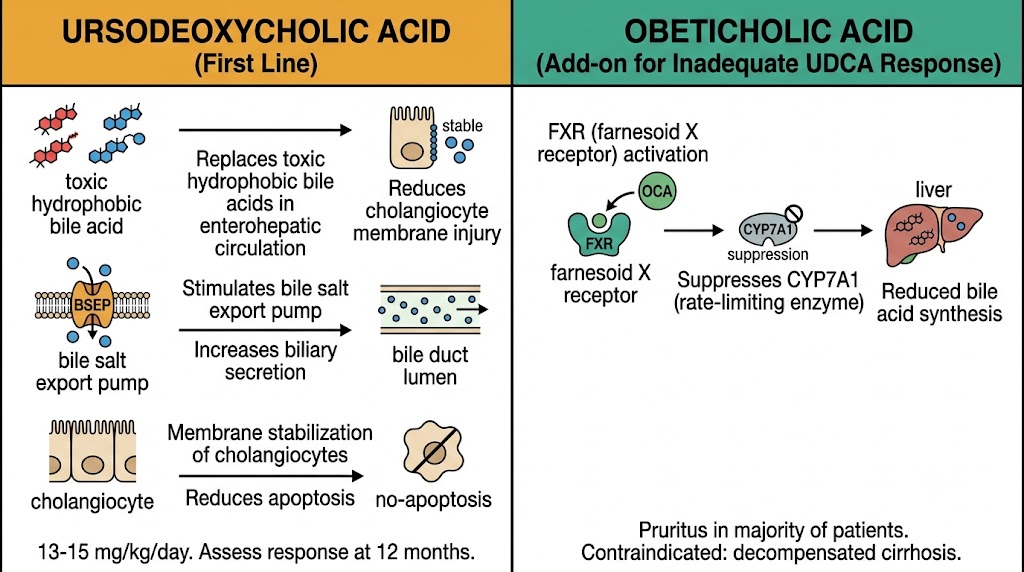
Ursodeoxycholic acid at 13 to 15 milligrams per kilogram per day is the first-line treatment for primary biliary cholangitis and has transformed its natural history. Ursodeoxycholic acid is a hydrophilic bile acid that replaces hydrophobic, hepatotoxic endogenous bile acids in the enterohepatic circulation, reducing their toxic concentration at the cholangiocyte membrane. Additional mechanisms include stimulation of biliary secretion via activation of bile salt export pump expression, membrane stabilization of cholangiocytes against bile acid-induced apoptosis, and immunomodulatory effects reducing ductular inflammation. Ursodeoxycholic acid slows fibrosis progression, improves liver biochemistry (alkaline phosphatase, bilirubin, alanine aminotransferase), and reduces the risk of cirrhosis and liver-related death in long-term follow-up studies. Approximately 30 to 40 percent of patients have an inadequate biochemical response to ursodeoxycholic acid, defined by persistent elevation of alkaline phosphatase above 1.67 times the upper limit of normal after 12 months of therapy, and require second-line treatment.
Obeticholic acid is a semi-synthetic bile acid and potent agonist of the farnesoid X receptor, a nuclear receptor that regulates bile acid synthesis and transport. Farnesoid X receptor activation reduces bile acid synthesis by suppressing cholesterol 7-alpha hydroxylase, the rate-limiting enzyme in bile acid synthesis, and stimulates bile acid export from hepatocytes. In the POISE (Primary Biliary Cholangitis OCA International Study of Efficacy) phase 3 trial, obeticholic acid significantly reduced alkaline phosphatase levels in patients with an inadequate response to ursodeoxycholic acid. It is approved as add-on therapy in this population. The principal adverse effect limiting use is pruritus, which occurs in the majority of patients and can be severe; it must be proactively managed with cholestyramine or rifampicin as antipruritic agents. Obeticholic acid is contraindicated in decompensated cirrhosis, as it can worsen hepatic function in this setting.
Bezafibrate, a fibrate drug that activates peroxisome proliferator-activated receptor-alpha and other nuclear receptors involved in bile acid metabolism, has demonstrated significant alkaline phosphatase reduction and pruritus improvement in patients with primary biliary cholangitis inadequately responding to ursodeoxycholic acid. It is used off-label in many centers as an alternative second-line agent to obeticholic acid, particularly in patients who cannot tolerate obeticholic acid-induced pruritus.
Primary sclerosing cholangitis is a progressive fibro-inflammatory disease of the bile ducts for which no pharmacological therapy has demonstrated slowing of disease progression or improvement in transplant-free survival in randomized controlled trials. Ursodeoxycholic acid improves liver biochemistry in primary sclerosing cholangitis but did not improve outcomes in the large randomized controlled trial that used 28 to 30 milligrams per kilogram per day; at higher doses it was associated with worse outcomes and is not recommended. Dominant biliary strictures are managed by endoscopic retrograde cholangiopancreatography with balloon dilation or stenting. The risk of cholangiocarcinoma — approximately 10 to 15 percent lifetime risk in primary sclerosing cholangitis — requires annual monitoring with magnetic resonance cholangiopancreatography and cancer antigen 19-9. Liver transplantation is the only effective treatment for advanced primary sclerosing cholangitis, though recurrence in the allograft occurs in approximately 25 percent of patients.
Step 1: ursodeoxycholic acid 13 to 15 milligrams per kilogram per day — first-line for all patients. Assess biochemical response at 12 months: alkaline phosphatase below 1.67 times upper limit of normal plus normal bilirubin (Paris criteria II) indicates adequate response; continue ursodeoxycholic acid. Step 2: inadequate response at 12 months — add obeticholic acid 5 milligrams daily (titrate to 10 milligrams after 3 months if tolerated) or bezafibrate 400 milligrams daily. Manage obeticholic acid-induced pruritus proactively with cholestyramine. Contraindication to obeticholic acid: decompensated cirrhosis.
The ammonia hypothesis and its limitations, lactulose as the cornerstone of acute treatment, rifaximin for secondary prophylaxis, precipitant identification as the most important management step, and the zinc deficiency consideration
Hepatic encephalopathy is a neuropsychiatric syndrome complicating cirrhosis, arising primarily from impaired hepatic clearance of gut-derived nitrogen compounds, particularly ammonia, and their effects on cerebral function. Treatment targets both the acute episode and prevention of recurrence.
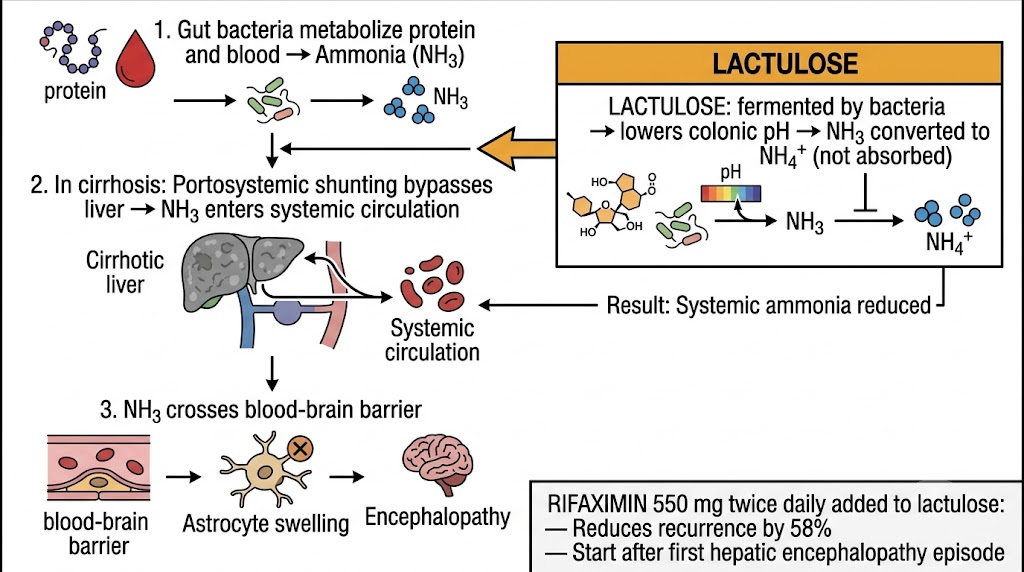
Ammonia produced by intestinal bacterial metabolism of nitrogenous compounds — dietary protein, blood from gastrointestinal hemorrhage, urea entering the gut — normally undergoes hepatic urea cycle metabolism. In cirrhosis, portosystemic shunting bypasses the liver and reduced hepatocyte mass impairs urea cycle function, allowing ammonia to accumulate in the systemic circulation and cross the blood-brain barrier. Ammonia is metabolized in astrocytes to glutamine, causing osmotic astrocyte swelling and cerebral edema. Precipitating factors — gastrointestinal bleeding, infection, constipation, hypokalemia from diuretics, hyponatremia, sedative use, portal vein thrombosis, and dietary protein excess — must be identified and corrected as the primary treatment step, as addressing the precipitant alone often resolves mild to moderate encephalopathy without additional pharmacotherapy.
Lactulose is a non-absorbable disaccharide that is fermented by colonic bacteria to short-chain fatty acids, lowering colonic pH. The acidic environment traps ammonia as ammonium ion (NH4+), which is poorly absorbed across colonic epithelium, reducing systemic ammonia absorption. Colonic acidification also alters the bacterial flora toward non-urease-producing species, further reducing ammonia generation. Lactulose is given orally or by nasogastric tube, titrated to produce two to three soft stools per day — the target stool frequency confirms adequate drug delivery and avoids the adverse effect of excessive diarrhea, which causes dehydration, hyponatremia, and worsened encephalopathy. Lactulose enemas are used when oral administration is not feasible.
Rifaximin 550 milligrams twice daily significantly reduces the risk of hepatic encephalopathy recurrence when added to lactulose maintenance therapy. In the pivotal randomized controlled trial, rifaximin reduced the risk of a breakthrough hepatic encephalopathy episode by 58 percent and the risk of hospitalization for hepatic encephalopathy by 50 percent compared with placebo over a 6-month observation period, with patients continuing background lactulose in both arms. Rifaximin is minimally absorbed (less than 0.4 percent systemic bioavailability), acts intraluminally to reduce ammonia-generating bacterial populations, and is well tolerated without significant systemic adverse effects or meaningful contribution to systemic antibiotic resistance. It is indicated for secondary prophylaxis of hepatic encephalopathy in patients who have recovered from a prior episode. Its high cost relative to lactulose means it is typically added as a second-line agent after lactulose alone has failed to prevent recurrence rather than used as monotherapy.
Zinc deficiency is common in cirrhosis and contributes to impaired urea cycle enzyme function, as several urea cycle enzymes require zinc as a cofactor. Zinc supplementation may modestly improve hepatic encephalopathy in zinc-deficient patients and is low-risk. Dietary protein restriction is no longer recommended; adequate protein intake of 1.2 to 1.5 grams per kilogram per day is essential to prevent sarcopenia, and protein from branched-chain amino acid-enriched vegetable and dairy sources is preferred over animal-derived protein in patients with protein intolerance. Neomycin, an older non-absorbable antibiotic previously used for hepatic encephalopathy, is no longer recommended due to nephrotoxicity and ototoxicity risk with long-term use, despite minimal systemic absorption.
| Author / Organization | Title | Source |
|---|---|---|
| Thursz MR et al. | Prednisolone or pentoxifylline for alcoholic hepatitis (STOPAH trial) | N Engl J Med 2015;372(17):1619–1628 |
| Mathurin P et al. | Corticosteroids improve short-term survival in patients with severe alcoholic hepatitis | Gut 2011;60(2):255–260 |
| Harrison SA et al. | Resmetirom (MGL-3196) for the treatment of non-alcoholic steatohepatitis (MAESTRO-MASH) | N Engl J Med 2023;390(6):497–509 |
| Nevens F et al. | A placebo-controlled trial of obeticholic acid in primary biliary cholangitis (POISE) | N Engl J Med 2016;375(7):631–643 |
| Corpechot C et al. | A placebo-controlled trial of bezafibrate in primary biliary cholangitis | N Engl J Med 2018;378(23):2171–2181 |
| Bass NM et al. | Rifaximin treatment in hepatic encephalopathy | N Engl J Med 2010;362(12):1071–1081 |
| Vilstrup H et al. | Hepatic encephalopathy in chronic liver disease: 2014 Practice Guideline by the AASLD and EASL | Hepatology 2014;60(2):715–735 |
| Lindor KD et al. | Primary biliary cholangitis: 2018 Practice Guidance from the American Association for the Study of Liver Diseases | Hepatology 2019;69(1):394–419 |